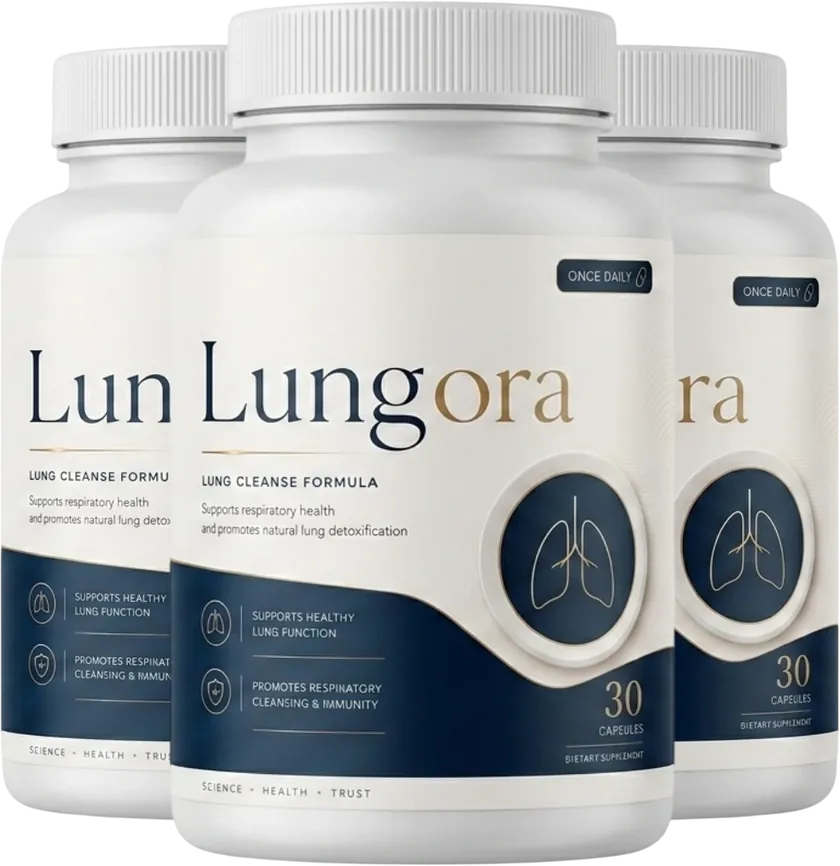
How lungs clean themselves, piece by piece
A pair of lungs clears itself continuously: mucus traps particles, cilia sweep that mucus upward on the mucociliary escalator, a cough backs up the system when needed, and alveolar macrophages clean the deepest air sacs. Smoke slows and damages cilia; quitting lets the system recover, but gradually, over months, not overnight. This is the process a bottle promising lung detoxification is standing in front of.

What a lung is already doing before you take anything
A bottle on a shelf says it promotes natural lung detoxification. Before weighing whether a capsule can do that, it helps to know what a pair of lungs is already doing, right now, without anyone swallowing anything. It turns out to be a working system with several parts, each with a job, and none of them waiting for outside help.
Kia'i et al., 2023 describes the airway lining as built almost entirely around this one task: more than half of the cells in the conducting airways carry cilia, and those cilia move a layer of mucus in one direction, toward the throat, all day and all night. That is the system this guide walks through, piece by piece, before coming back to what a lung-cleanse capsule actually has to compete with.
The mucus layer: catching what you breathe in before it goes further
The first line of defense is a layer most people never think about: airway mucus. Goblet cells and small glands in the airway wall make it continuously, and it sits over the cells lining your bronchial tubes like a thin, sticky sheet.
Dust, pollen, smoke particles and bacteria that make it past your nose land in that layer and stick, per Kia'i et al., 2023. Underneath the sticky mucus is a second, thinner and more watery layer, where the cilia themselves sit and beat. Splitting the airway surface into those two layers is not an accident: the cilia need a thin fluid to move freely in, and the mucus above needs to stay separate enough that it can be pushed rather than dragged along with them.
None of this is a stagnant coating. It is made, used and replaced on an ongoing basis, which is part of why a healthy airway keeps working through an ordinary day of breathing polluted city air, pet hair and everything else without any of it building up.
The mucociliary escalator: the part that actually moves things
| Part of the system | What it does | Roughly how fast |
|---|---|---|
| Goblet cells and airway glands | Make the mucus that traps particles | Continuous |
| Cilia | Beat in coordinated waves to push mucus toward the throat | Kia'i et al., 2023: about 8 to 20 beats per second |
| The mucociliary escalator | The whole moving system, mucus riding on the beating cilia | Runs around the clock, awake or asleep |
| Swallowing or coughing | Disposes of what reaches the throat | As often as needed, usually without you noticing |
"Escalator" is the right word for it. Mucus loaded with trapped particles rides upward on a moving surface, powered by cilia beating in a coordinated direction, until it reaches the throat, where it gets swallowed or coughed out. American et al., 2026 describes exactly this: cilia lining the bronchial tubes move in a wave, carrying mucus that has already trapped dust and germs up and out, cleared the rest of the way by coughing, sneezing, throat-clearing or swallowing.
Swallowed mucus is not a failure of the system; stomach acid handles whatever lands there without issue. The escalator does not need to finish outside your body to have done its job. It only needs to move debris out of the airway and up to where the rest of your digestive system can take over.
The escalator, taken apart piece by piece
- 1
A cell built almost entirely for this one job
Ciliated cells make up more than half the lining of your conducting airways, and each one carries somewhere between 200 and 300 individual cilia, per Kia'i et al., 2023.
- 2
The beat has two strokes, not one
A power stroke sweeps a cilium through the mucus layer above, moving it forward. A recovery stroke brings the cilium back close to the cell surface, in the thinner fluid underneath, so it does not drag the mucus backward on the way.
- 3
Neighboring cilia beat slightly out of step, on purpose
That staggered timing, moving in a wave rather than all at once, is what keeps mucus travelling in one direction instead of sloshing back and forth with every stroke.
- 4
A cough is the manual override, not the everyday method
When there is too much mucus, or something irritating hits the airway hard, an explosive burst of airflow clears in seconds what the escalator would otherwise take much longer to move.
- 5
Past the smallest airways, there are no cilia left to help
The alveoli, where oxygen actually crosses into blood, have no mucus layer and no cilia. Whatever reaches that deep needs a different kind of cleanup entirely.
This is the part the word “cleanse” is standing in front of. The system above runs whether or not you buy anything, and the one thing that measurably changes how well it runs is what you stop putting into it.
Five moving parts, and every one of them keeps working without a reminder, a supplement or a subscription.
Cough: the fast backup, not a sign anything is broken
A cough is not a sign the escalator has failed. It is a second tool kept in reserve for a sudden irritant or an infection's extra mucus, when the slow, steady ciliary beat cannot keep up. Nerve endings sense the irritation and trigger a forceful burst of airflow that clears in seconds what the escalator alone would need far longer to move.
A cough that will not go away after three weeks is a different matter, and belongs with a doctor, not a home remedy.
Alveolar macrophages: cleanup crew for the part cilia cannot reach
The mucociliary escalator has a hard limit: it stops at the smallest airways. Past that point, in the alveoli where the actual gas exchange happens, there is no mucus layer for cilia to push. A different cell handles cleanup down there, and it never really stops working.
Aegerter et al., 2022 describes alveolar macrophages as the lung's resident first responders in that deepest space: they continuously patrol the air sacs, engulfing inhaled particles, bacteria and dying cells, and they do it in a way that avoids triggering the kind of inflammation that would itself damage delicate lung tissue. That review calls the process efferocytosis, using scavenger receptors on the macrophage surface to recognize and clear debris.
This is a standing, ongoing biological process, not something switched on by a supplement. Nothing in the review that describes it mentions an oral product enhancing it, because the system already runs at full capacity as part of normal lung biology.
What cigarette smoke does to cilia
Smoke does not remove the mucociliary escalator. It slows it down. The heat and chemicals in cigarette smoke can paralyze ciliary beating and, with enough repeated exposure, thin out the ciliated cells themselves, leaving mucus with less to ride on and a slower trip out of the airway.
That slower escalator is a big part of why a smoker's cough exists: mucus piles up faster than a damaged system can clear it, so the backup system, coughing, has to work harder and more often to compensate. It is the airway doing exactly what it is supposed to do under worse conditions, not a separate illness layered on top.
American et al., 2024 puts the fix plainly: the lungs are self-cleaning organs that begin to heal once they are no longer exposed to what was damaging them. Removing the exposure, not adding a capsule, is the step that actually matters here.
After quitting: what changes, on what timescale, and what actually impairs clearance
| What was measured | Result | Timeframe |
|---|---|---|
| FEV1 (a standard lung-function measurement) | A small, not statistically significant, improvement (SMD 0.23) per Wang et al., 2025 | 12 to 52 weeks after quitting |
| FVC and the FEV1/FVC ratio | No meaningful change detected across the pooled studies | Same 12 to 52 week window |
| Younger participants and those with asthma | Somewhat larger improvements than older participants with COPD, though still not statistically significant | Same window |
Quitting is the one intervention with real evidence behind it, and even that evidence is honest about the pace. The pooled data above shows only a marginal, statistically borderline change in measured lung function within about a year of quitting, which lines up with what the physiology above predicts: cilia that were slowed or thinned by years of smoke exposure do not snap back the week the last cigarette is put out. Repair of the airway lining is a gradual, biological process, not a switch.
That gradual pace is the honest answer to how fast lungs recover, and no capsule changes it. The system heals at the speed tissue heals, once whatever was damaging it stops.
What genuinely impairs clearance
- Smoking, which slows and can shorten cilia, the best-documented cause by far.
- Certain inherited or chronic conditions, such as cystic fibrosis or primary ciliary dyskinesia, which affect the mucus or the cilia's structure directly.
- Severe, prolonged dehydration, which can thicken mucus, though the evidence tying ordinary daily water intake to a measurable clearance change is thin.
What does not measurably change it
- An oral capsule swallowed once a day, since American et al., 2024 finds lung-cleanse products largely unproven as a category.
- A single "detox" day or bottle, since this system runs continuously with no backlog to clear in a short burst.
National Heart, 2024 lists the steps with real evidence behind lung health: not smoking, avoiding air pollution, staying active, a healthy weight, and recommended checkups and vaccines. A supplement appears on that list nowhere.
What a lung-cleanse capsule is actually standing in front of
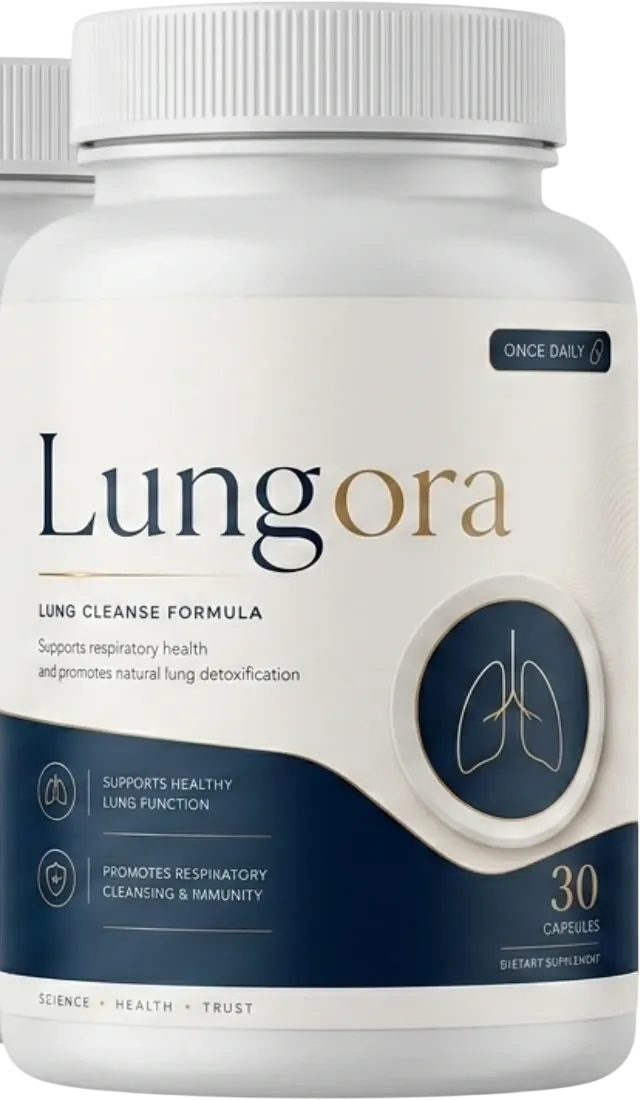
Everything above runs whether or not a bottle like this one exists. Mucus is being made right now. Cilia are beating right now, whether you are reading this at a desk or asleep. Macrophages are patrolling the deepest part of your lungs, also right now. None of that started when a supplement company chose the word cleanse for a label.
Federal et al., 2022 requires competent, reliable clinical evidence before a product implies it treats or protects against a disease-related outcome, and notes regulators have settled or litigated more than 200 false health-claim cases on exactly this kind of wording since 1998. A capsule promising to promote natural lung detoxification is making a claim about a system that was never waiting for it.
None of that means every ingredient inside a bottle like this is worthless; it means the system this page describes is not what any of them were studied for. That distinction is worked through on the ingredient breakdown.
A cough lasting more than three weeks, new or worsening shortness of breath, coughing up blood, new wheezing, or chest pain are not signs the escalator needs a boost. American et al., 2026 lists these as reasons for a medical evaluation, not reasons to reach for a capsule.
How Lungs Clean Themselves: common questions
What is the mucociliary escalator?
The system that moves airway mucus, loaded with trapped particles, upward toward the throat using coordinated beating cilia. It runs continuously, awake or asleep.
How fast do cilia actually beat?
Roughly 8 to 20 times per second, per Kia'i et al., 2023, moving in a coordinated wave rather than all at once.
What do alveolar macrophages do?
They patrol the alveoli, the deepest part of the lung where cilia cannot reach, and clear particles, bacteria and dying cells continuously without triggering damaging inflammation.
Does smoking permanently damage this system?
Smoke slows and can thin ciliary function while exposure continues. Quitting lets the system recover, but a 2025 meta-analysis found only a marginal, not statistically significant, lung-function change over 12 to 52 weeks.
Can a supplement speed up lung clearance?
No published evidence located here supports that. The American Lung Association describes lung-cleanse claims as largely unproven, and this continuous system was not shown to need or respond to an oral product.
Is coughing a sign something is wrong?
Not by itself. A cough is a normal backup system for clearing mucus quickly. A cough lasting more than three weeks is the point where it becomes a reason to see a doctor.
Does drinking more water measurably speed up mucus clearance?
Severe dehydration can thicken mucus, but the evidence tying ordinary daily water intake to a measurable clearance-speed change is thin; treat it as a reasonable habit, not a proven fix.
What actually helps lung clearance if I smoke?
Quitting. It is the one step with real, sourced evidence behind it, even though the improvement it produces is gradual rather than immediate.
Keep reading
Read the full FDA and health disclaimer
The FDA statement in full, red-flag symptoms, and why this is not a treatment for any lung condition.
Read →What is actually in the capsule this page keeps mentioning?
Six ingredients, one measured amount, and what each is really studied for.
Read →What does elemental magnesium actually mean?
The arithmetic behind the one measured number on this label, worked through in full.
Read →Order Lungora from the authorized retailer
30 capsules per bottle, one capsule a day. Kits of 2, 3 or 6 bottles run from $49 a bottle on the sales page, with a 60-day money-back guarantee. Questions first? The FAQ page answers most of them.