What elemental magnesium actually means on a label
Elemental magnesium is the actual mineral in a capsule, not the whole compound carrying it. Magnesium glycinate is roughly 10 to 14.1% elemental magnesium by weight, so reaching Lungora's printed 80 mg needs about 567 to 800 mg of the compound, inside a 575 mg blend that also has to hold five other ingredients. The supplemental upper limit is 350 mg a day.
What the word elemental is actually doing on a label
A mineral label almost never prints the weight of the whole compound you swallowed. It prints the weight of the mineral itself, once whatever it was attached to is subtracted out. That figure is called elemental, and it is the number a Supplement Facts panel is required to use for magnesium, calcium, iron, zinc and the rest.
The distinction matters because almost no mineral travels alone in a capsule. Pure magnesium metal reacts with air and water, so a manufacturer binds it to something else, an acid, an amino acid, an oxide, to make a stable powder that can be pressed or filled into a capsule. That something else has its own weight, and it is not magnesium.
Why a chelate is mostly the amino acid, by weight
Magnesium glycinate, also called magnesium bisglycinate, is a chelate: one magnesium ion held by two glycine molecules, an amino acid. Glycine is a small molecule, but there are two of them wrapped around a single magnesium atom, and together they outweigh the mineral they are carrying.
Global et al., 2025, a manufacturer specification for the ingredient itself, states the number directly: pure magnesium bisglycinate chelate is 14.1% elemental magnesium by mass, meaning 100 mg of elemental magnesium needs about 709 mg of the compound. That figure is not a rough estimate; it matches the molecular-weight calculation exactly, because magnesium weighs 24.31 units and the full bisglycinate molecule weighs 172.42, and 24.31 divided by 172.42 comes out to almost exactly that same percentage.
Put another way: for every 100 mg of this compound in a capsule, roughly 86 mg is glycine and about 14 mg is the magnesium it was bought for. That ratio is the ceiling for a pure chelate. It cannot be pushed higher without changing what the ingredient actually is.
How to do this arithmetic yourself, on any label
Find the elemental amount on the label
Look for wording like "Magnesium (as Magnesium Glycinate) 80 mg." That milligram figure is elemental, the mineral alone, not the compound.Find the compound's elemental percentage
A manufacturer specification sheet or a reference source states this per compound. Pure magnesium bisglycinate runs about 10 to 14.1% elemental, depending on the source.Divide the elemental target by that percentage
Elemental amount divided by the decimal percentage gives the compound weight needed. 80 mg divided by 0.141 is about 567 mg; 80 mg divided by 0.10 is about 800 mg.Compare that number to the total blend or bottle weight
If the compound weight needed is close to, or larger than, the total weight printed for the blend it sits inside, there is very little room left for anything else the label lists alongside it.
Compound weight versus elemental weight, form by form
| Form | How well it is absorbed | Elemental percentage, sourced |
|---|---|---|
| Magnesium oxide | Among the less soluble, less completely absorbed forms, per National Institutes of Health, 2026 | No figure sourced here; treat any percentage you see elsewhere as unverified against this reference |
| Magnesium citrate | Dissolves well in liquid, among the more completely absorbed forms, per National Institutes of Health, 2026 | Same reference does not give a percentage; not stated here |
| Magnesium glycinate (bisglycinate) | Not ranked directly in that fact sheet, but built from a well-absorbed amino acid carrier | 10–14.1% for pure chelate, per Global et al., 2025 |
Notice what is missing from that table on purpose. Magnesium oxide is widely quoted elsewhere as roughly 60% elemental by simple molecular weight, and magnesium citrate somewhere in the low teens depending on which citrate salt is used, but neither number comes from a source checked for this page, so neither is printed above as a fact this site stands behind. Only the glycinate figure carries a citation solid enough to build an argument on, which is exactly why that is the form worth working through in full.
Lungora's own numbers, worked through
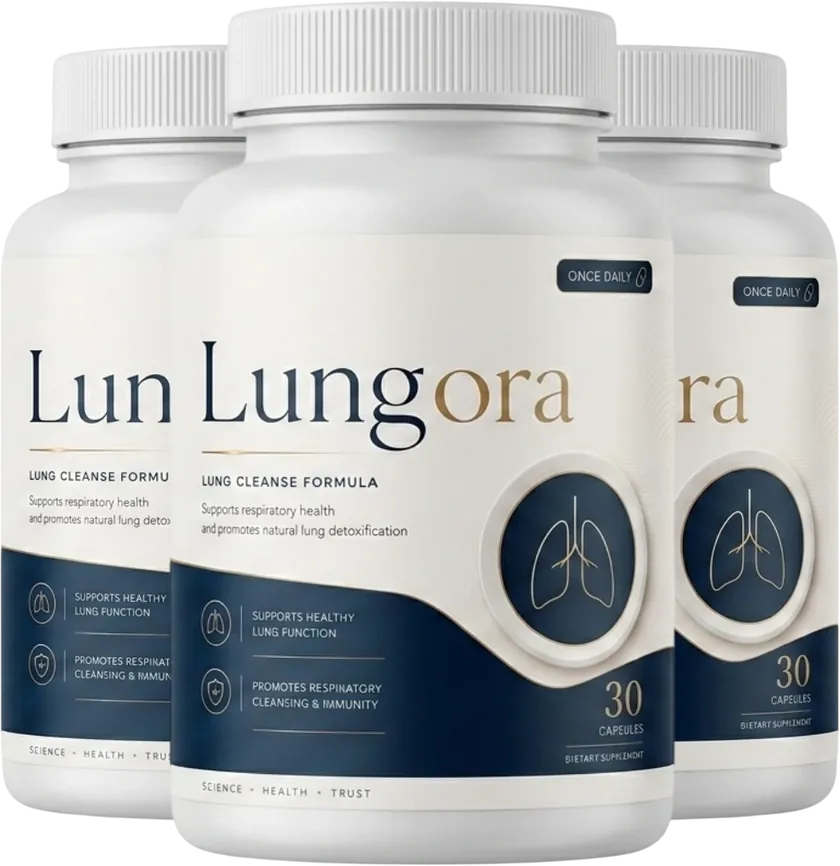
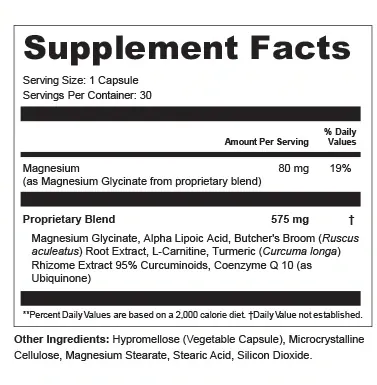
Now put those two numbers next to each other. The panel prints 80 mg of elemental magnesium, 19% of the Daily Value, delivered from magnesium glycinate inside the blend. The same panel prints a 575 mg Proprietary Blend total, and that single 575 mg has to also hold alpha lipoic acid, butcher's broom, L-carnitine, turmeric extract and CoQ10.
Run the arithmetic from the steps above and 80 mg of elemental magnesium needs somewhere between 567 mg and 800 mg of magnesium glycinate on its own, using the sourced range for the pure chelate. Either end of that range is close to, or larger than, the entire 575 mg the blend is allowed to weigh.
The one honest explanation, and why it cannot be confirmed from the label
0 mg800 mg
- 567 to 800 mgof magnesium glycinate needed to deliver the printed 80 mg of elemental magnesium
- 8 mg or lessleft over for alpha lipoic acid, butcher’s broom, L-carnitine, turmeric and CoQ10 combined, and at the other end of the range, nothing at all
Magnesium glycinate is roughly 10 to 14.1% elemental magnesium by weight, so 80 mg of magnesium needs somewhere between 567 mg and 800 mg of the compound. The blend is 575 mg in total, and the marker shows where that sits on the same scale. There are honest explanations, and the likeliest is a buffered magnesium blend with a higher elemental share. The point is that the label does not give you enough to tell, and the five other names have to fit in whatever is left.
There is an honest, charitable explanation, and it is worth stating plainly instead of only implying it. Commercial magnesium glycinate powders exist that report a higher elemental share, sometimes stated around 20% or more, but those are not the pure chelate the manufacturer specification above describes. They are a buffered blend: magnesium glycinate mixed with a second, non-chelated magnesium source, commonly magnesium oxide, to raise the elemental percentage above what a single chelate can reach on its own.
If that is what sits inside this particular blend, the true elemental percentage could run higher than the 14.1% ceiling for a pure chelate, which would need less compound weight to hit 80 mg and leave more of the 575 mg for the other five ingredients. That is a real possibility, not a dismissal of the concern.
The problem is that the label does not say which one this is. It reads "Magnesium (as Magnesium Glycinate from proprietary blend)," a single phrase that covers both a pure chelate and a buffered blend equally well, and a reader has no printed number that settles which. That is the actual gap here: not proof of a mistake, but the absence of the one figure that would let anyone check the claim for themselves.
What the 350 mg/day upper limit actually covers
| Source of magnesium | Counts toward the 350 mg/day supplemental limit? |
|---|---|
| Lungora, one capsule (80 mg elemental) | Yes |
| A separate magnesium citrate or oxide supplement | Yes |
| A magnesium-containing antacid or laxative | Yes, and these can carry large amounts |
| Magnesium naturally present in food (leafy greens, nuts, whole grains) | No, the limit does not apply to food |
| Magnesium in drinking water | No, for the same reason |
National Institutes of Health, 2026 sets the adult RDA for magnesium at 310 to 420 mg a day depending on age and sex, counting food and supplements together, and separately sets a Tolerable Upper Intake Level of 350 mg a day specifically for magnesium from supplements and medications. That upper limit exists because supplemental magnesium, unlike food magnesium, can cause diarrhea and stomach upset at high enough doses; it is not a statement about long-term organ risk at the labeled amount.
At 80 mg, this capsule sits well under that 350 mg ceiling on its own. What the limit does not do is reset for each product you take: it adds up. Anyone also taking a separate magnesium supplement, a magnesium-heavy antacid, or a laxative built on magnesium needs to add this 80 mg to that total, not treat it as a fresh allowance.
Where that leaves a reader holding the bottle
None of this arithmetic requires trusting a claim you cannot check. The elemental percentage for a pure magnesium bisglycinate chelate comes from the ingredient's own manufacturer specification, the molecular-weight math behind it is ordinary chemistry anyone can redo, and the 575 mg blend total is printed on the bottle in your hands. Every step above works from a number that is either sourced or printed, not assumed.
What is missing is not the arithmetic, it is one disclosure the label chose not to make: whether the magnesium glycinate inside this blend is the pure chelate the tight math above describes, or a buffered blend that would loosen it. Until a bottle prints that, the honest position is to hold both possibilities at once rather than pick the more dramatic one.
More on the six names sharing that 575 mg is on the ingredient breakdown, and the full magnesium safety picture, alongside the other five ingredients, is on the side effects page.
What Elemental Magnesium Means: common questions
What does elemental magnesium mean?
The weight of the actual magnesium mineral in a dose, once the carrier it is chemically bound to is subtracted out. It is the number a Supplement Facts panel is required to print.
Why isn't magnesium glycinate 100% magnesium?
Because it is a chelate: one magnesium ion bound to two glycine molecules. Glycine outweighs the magnesium, so pure magnesium bisglycinate is only about 14.1% elemental magnesium by weight.
How much magnesium glycinate does it take to reach 80 mg elemental?
Using the sourced 10 to 14.1% elemental range, roughly 567 to 800 mg of the compound, which is close to or larger than Lungora's entire 575 mg blend.
Does that mean Lungora's label is wrong?
Not provably. A buffered magnesium blend with a higher elemental share would loosen this arithmetic, and the label does not say which kind of magnesium glycinate is used, so it cannot be confirmed either way.
Is magnesium oxide more elemental than glycinate?
Magnesium oxide is commonly cited elsewhere as having a higher elemental percentage, but that figure was not confirmed in the sources checked for this page, so it is not stated here as a sourced fact.
What is the 350 mg upper limit for?
The Tolerable Upper Intake Level for supplemental magnesium, set by NIH ODS, separate from the higher RDA that includes food. It does not apply to magnesium from food or water.
Does 80 mg of magnesium exceed that limit?
No, 80 mg is well under 350 mg on its own. It still counts toward that limit alongside any other magnesium supplement, antacid or laxative someone also takes.
Can I check this math myself?
Yes. Divide the elemental milligrams on any label by the compound's elemental percentage from a sourced reference, then compare that to the total blend weight printed on the same panel.
Keep reading
What is actually in the capsule?
Six ingredients, one measured amount, and what each is really studied for.
Read →What interacts with what in this blend?
The sourced safety picture for magnesium, alpha lipoic acid, CoQ10 and the rest.
Read →The Supplement Facts panel, decoded
Every line on the panel, including the other-ingredients and daily-value columns.
Read →Order Lungora from the authorized retailer
30 capsules per bottle, one capsule a day. Kits of 2, 3 or 6 bottles run from $49 a bottle on the sales page, with a 60-day money-back guarantee. Questions first? The FAQ page answers most of them.