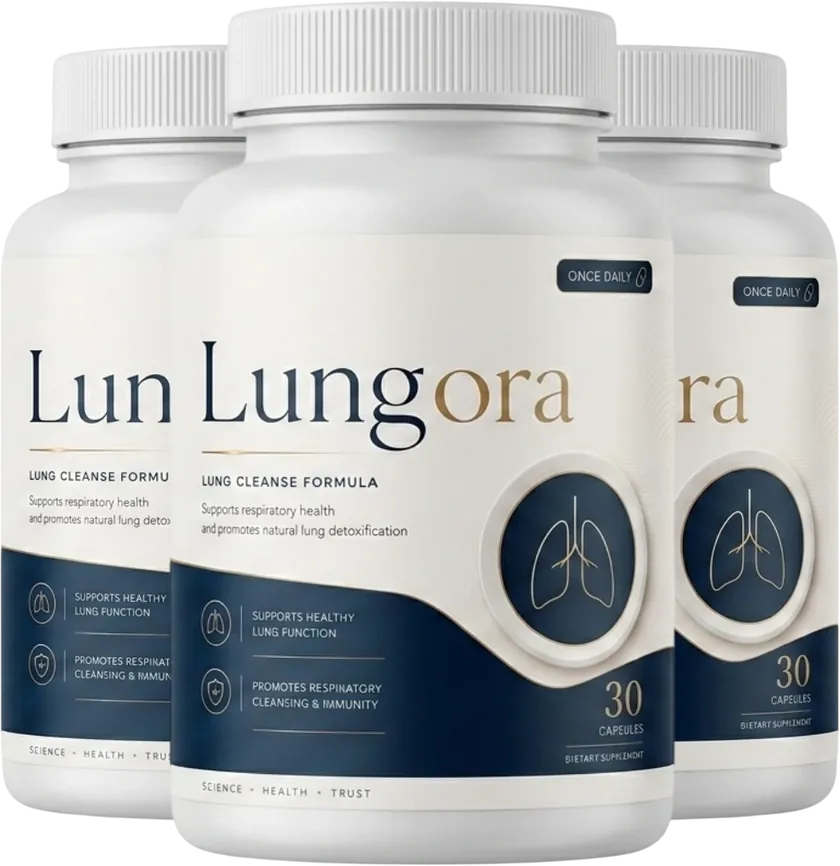
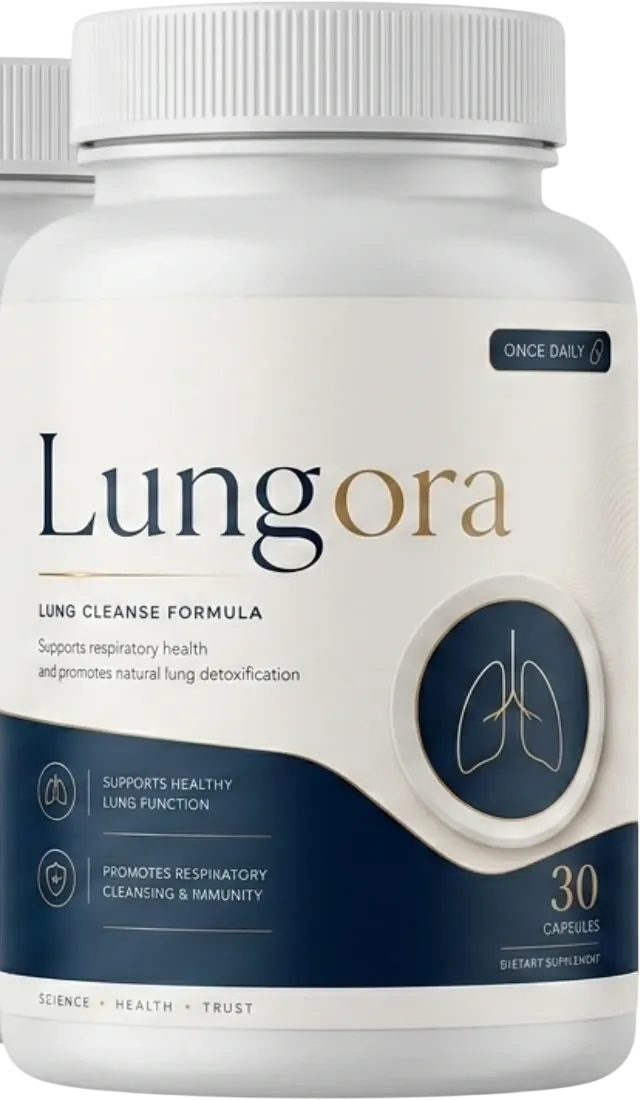
Lungora Side Effects: What to Check Before You Start
The main thing to watch with Lungora is its magnesium, which may cause loose stools at higher intakes.
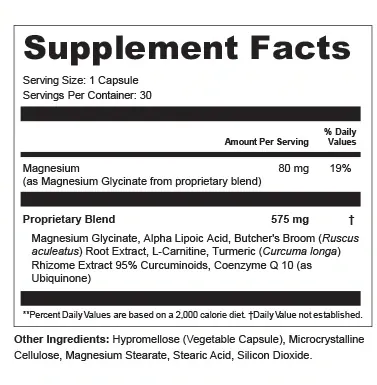
Its 80 mg of magnesium sits under the 350 mg daily supplement limit. Ask a doctor first if you take warfarin or blood sugar medication, since CoQ10 and alpha lipoic acid may interact.
See who Lungora is for.
What to read before the first capsule
This page is the one to read before the first capsule, not after a reaction. It goes through every ingredient on the Lungora panel that carries a real, sourced safety consideration: magnesium and its supplemental limit, CoQ10 and warfarin, alpha lipoic acid and blood sugar, turmeric and the liver, and butcher’s broom’s more limited caution list.
Then it says plainly why undisclosed amounts inside a 575 mg blend make every one of those conversations harder, and it closes with the signs that mean stop reading this page and call a doctor.
Magnesium and the 350 mg supplemental upper limit
The 350 mg supplemental limit
National Institutes of Health, 2026 sets a Tolerable Upper Intake Level of 350 mg a day for magnesium taken as a supplement, separate from magnesium eaten in food. Lungora supplies 80 mg, comfortably under that ceiling on its own.
Why 80 mg still matters
The 350 mg limit is a total across everything supplemental you take in a day, not a per-product allowance. A separate magnesium supplement, a multivitamin with magnesium in it, or a magnesium-rich antacid all add to the same running total, and gastrointestinal effects, mainly loose stools and cramping, are the first sign of getting close to it.
Coenzyme Q10 and warfarin: the nuance, not the headline
CoQ10 and warfarin is one of the more misunderstood interactions in supplement safety, and it deserves the nuanced version, not the blanket warning. An older report suggested CoQ10 could reduce warfarin’s blood-thinning effect. A later, controlled study did not confirm that finding. Raizner et al., 2019 states this directly: one earlier report suggested a decreased effect, but a later controlled study showed no such interaction.
That does not make the question settled enough to ignore. The honest position is the one this label cannot support on its own: anyone on warfarin should mention any CoQ10-containing product to whoever manages that prescription, because the evidence is mixed rather than clean, and because Lungora does not disclose how much CoQ10 the blend actually contains.
Alpha lipoic acid: blood sugar, and a rare autoimmune reaction
Blood sugar
Jibril et al., 2022 found alpha lipoic acid meaningfully lowers blood sugar and HbA1c at doses from 200 to 1,200 mg a day, with the largest fasting-glucose effect around 600 mg. That is a real drug-like effect, not a side note, and it applies to people without diabetes too.
Insulin autoimmune syndrome
Li et al., 2021 documented 37 published cases of alpha lipoic acid triggering insulin autoimmune syndrome: severe hypoglycemia, often overnight or while fasting, with autonomic symptoms in most cases and recovery taking anywhere from five days to eight months after stopping. It is rare. It is also serious, and it is specific to this ingredient.
Turmeric extract and the documented liver-injury signal
Plain turmeric has a long history of food use and is generally considered safe short-term at typical amounts. National Center for Complementary and Integrative Health (NCCIH), 2024 says exactly that, and also warns that highly bioavailable formulations, often combined with piperine or a lipid delivery system specifically to increase absorption, “may harm your liver,” with liver damage reported as fatigue, nausea, poor appetite, dark urine or jaundice.
National Institute of Diabetes and Digestive and Kidney Diseases (LiverTox), 2020 describes this injury as idiosyncratic and likely immune-mediated, linked to a specific genetic marker (HLA-B*35:01) found in over 70% of cases, with symptoms typically starting one to four months after starting the product and resolving within one to three months of stopping it. The cases it describes were disproportionately tied to enhanced-bioavailability formulations.
Lungora’s label names “Turmeric (Curcuma longa) Rhizome Extract 95% Curcuminoids” with no piperine or other delivery technology disclosed. That likely means poorer absorption, which is a separate issue from the liver-injury signal, but it does not remove the signal: turmeric extracts in general, not only high-bioavailability versions, are the ingredient category LiverTox tracks.
Butcher's broom: a shorter caution list, not a clean pass
Butcher’s broom has the shortest caution list of the five, and that is worth saying plainly rather than treating every ingredient as equally risky. Vanscheidt et al., 2002 and Kakkos et al., 2017 both reported good tolerability across their venous-insufficiency trials, with no major safety signal in either.
Two cautions still apply. First, it has essentially no dedicated safety review for interactions with blood-pressure medicine or blood thinners, which means an absence of reported problems is not the same as a studied clean bill of health. Second, and more basically, butcher’s broom has no established respiratory benefit or risk profile at all, because it has not been studied for breathing in humans in either direction.
L-carnitine: gut effects, and a longer-term question mark
L-carnitine is the fifth blend ingredient with its own documented, if less acute, safety point. National Institutes of Health, 2023 reports doses around 3 grams a day can cause nausea, vomiting, cramps, diarrhea and a fishy body odor, and, more notably, that gut bacteria convert L-carnitine into TMAO, a compound linked to increased cardiovascular risk in observational research. Sawicka et al., 2020 confirms the TMAO rise and says it needs more long-term study rather than being dismissed.
Who should talk to a prescriber before starting
Check with a prescriber first
Anyone on warfarin or another blood thinner, anyone on insulin or a sulfonylurea, anyone with diagnosed liver disease, and anyone taking a separate magnesium supplement should raise this specific product by name before starting it.
Rules the label sets on its own
Not for anyone under 18, pregnant or nursing. Do not exceed the stated dose. Consult a physician first if taking any medication or managing any medical condition, which the label states outright.
The red flags that mean see a doctor, not take a capsule
None of the interactions above is the biggest risk on this page. The biggest risk is treating any supplement, including this one, as a reason to delay seeing a doctor about a real change in breathing.
- Shortness of breath that is new, or getting worse
- A cough that has lasted more than three weeks
- Coughing up blood
- Wheezing
- Chest pain
American et al., 2026 lists these as reasons for prompt medical evaluation, not self-treatment, and frames early evaluation as potentially life-saving. If you smoke, quitting is the one step with a measurable effect on how your lungs clear; no supplement, at any dose, offsets that.
Sources for this page
- National Institutes of Health, Office of Dietary Supplements (2026). Magnesium -- Health Professional Fact Sheet. NIH Office of Dietary Supplements. Source
- Raizner AE (2019). Coenzyme Q10. Methodist DeBakey Cardiovascular Journal. Source
- Jibril AT, Jayedi A, Shab-Bidar S (2022). Efficacy and safety of oral alpha-lipoic acid supplementation for type 2 diabetes management: a systematic review and dose-response meta-analysis of randomized trials. Endocrine Connections. Source
- Li Z, Su Y, Yi D, Wu C, Fang W, Wang C (2021). Analysis of the clinical characteristics of insulin autoimmune syndrome induced by alpha-lipoic acid. Journal of Clinical Pharmacy and Therapeutics. Source
- National Center for Complementary and Integrative Health (NCCIH), NIH (2024). Turmeric: Usefulness and Safety. NCCIH. Source
- National Institute of Diabetes and Digestive and Kidney Diseases (LiverTox) (2020). Turmeric. LiverTox: Clinical and Research Information on Drug-Induced Liver Injury (NCBI Bookshelf). Source
- Vanscheidt W, Jost V, Wolna P, Lücker PW, Müller A, Theurer C, Patz B, Grützner KI (2002). Efficacy and Safety of a Butcher's Broom Preparation (Ruscus aculeatus L. Extract) Compared to Placebo in Patients Suffering from Chronic Venous Insufficiency. Arzneimittelforschung. Source
- National Institutes of Health, Office of Dietary Supplements (2023). Carnitine -- Health Professional Fact Sheet. NIH Office of Dietary Supplements. Source
- American Lung Association (2026). Warning Signs of Lung Disease. American Lung Association. Source
What each ingredient is studied for in general sits on how it works, and the amounts printed on the panel are on the ingredients page.
Side Effects: common questions
Is 80 mg of magnesium safe?
Yes, on its own. It is well under the 350 mg/day supplemental Tolerable Upper Intake Level, though it still counts toward that total if you take magnesium from other supplements too.
Does CoQ10 interact with warfarin?
An older report suggested it might reduce warfarin's effect, but a later controlled study found no such interaction. Anyone on warfarin should still mention any CoQ10 product to their prescriber given the mixed history.
Can alpha lipoic acid affect blood sugar?
Yes. Research shows real reductions in blood sugar and HbA1c at doses of 200 to 1,200 mg a day, and rare but documented cases of insulin autoimmune syndrome causing severe hypoglycemia.
Is turmeric extract safe for the liver?
Plain turmeric is generally considered safe short-term, but turmeric and curcumin extracts, especially high-bioavailability versions, carry a documented, idiosyncratic liver-injury risk. Anyone developing fatigue, dark urine or jaundice should stop and seek care.
Does butcher's broom have safety concerns?
Trials reported good tolerability with no major safety signal, but it has no dedicated interaction studies for blood pressure or blood-thinning medicines, and no studied respiratory safety or benefit profile at all.
Why does the undisclosed blend amount matter for safety?
Every interaction above depends partly on dose. With five of six ingredients hidden inside one 575 mg total, a prescriber has no way to size the actual risk for any of them.
What symptoms mean I should see a doctor instead of adjusting a supplement?
Shortness of breath that is new or worsening, a cough past three weeks, coughing up blood, wheezing, or chest pain. These call for prompt medical evaluation, not a supplement change.
Keep reading
What is actually inside the 575 mg blend?
The six ingredients in label order, their studied doses, and what each one is.
Read →What is each ingredient studied for?
The research behind all six blend ingredients, and the limits of an undisclosed amount.
Read →How do I read the rest of the panel?
Serving size, the dagger symbol, %DV and the distributor block, line by line.
Read →Order Lungora from the authorized retailer
30 capsules per bottle, one capsule a day. Kits of 2, 3 or 6 bottles run from $49 a bottle on the sales page, with a 60-day money-back guarantee. Questions first? The FAQ page answers most of them.