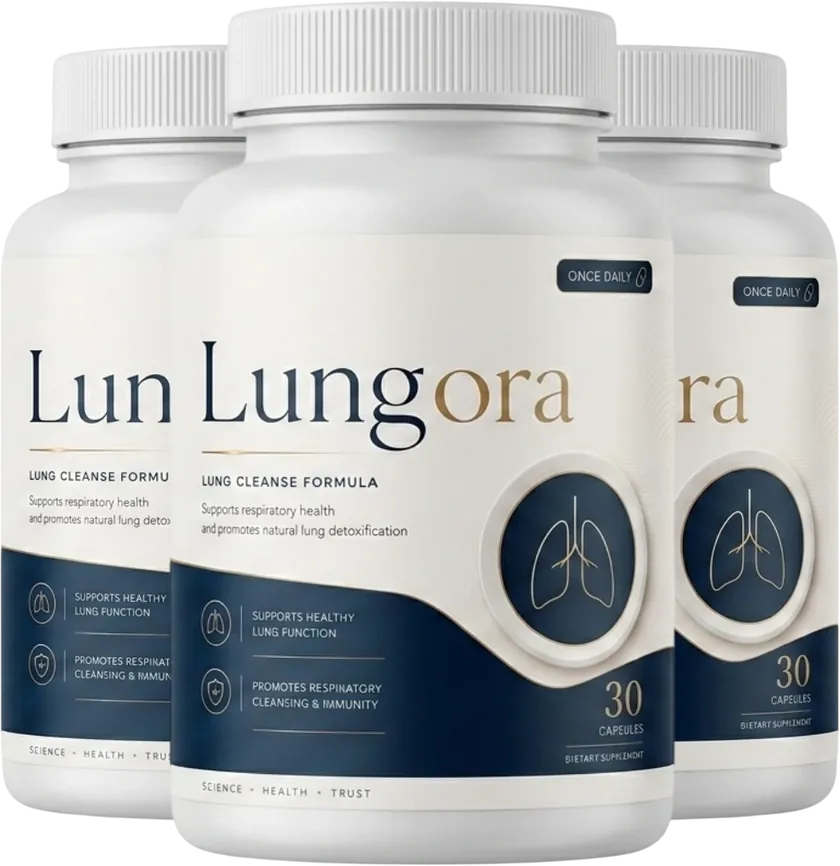
Who Is Lungora For? A Quick Fit Check
Lungora is made for adults 18 and over who want a simple daily magnesium and antioxidant capsule.
Ask a clinician first if you take warfarin, another blood thinner, a diabetes medication or another magnesium supplement. It is not for anyone pregnant, nursing or under 18.
See side effects and interactions for details.

Start here: which line describes you?
“Who is this for” sounds like a marketing question, but on this page it is a screening question. A capsule that names no respiratory ingredient still has real interactions and a real caution line, and the honest answer depends less on why someone wants to buy it than on what else is already true about them: their age, what they already take, and whether a lung disease is already part of their life. The table below is not a substitute for reading the fuller sections underneath it, but it is the fastest way to see which one applies to you before you read further.
| Your situation | What this page says |
|---|---|
| Healthy adult, 18+, no lung disease, no relevant medicine | A reasonable fit for a daily magnesium and antioxidant capsule. |
| On warfarin, another blood thinner, or a diabetes medicine | Ask a clinician before starting. See the table below for why. |
| Already taking a magnesium supplement | Ask first, and add up your total magnesium before you do. |
| Diagnosed with asthma, COPD, emphysema or bronchitis | Do not treat this as part of your treatment. Keep every prescribed medicine unchanged. |
| Currently smoke | Put the money toward quitting support instead. See the section below. |
| Pregnant, nursing, or under 18 | Do not take it. The label rules this out directly. |
Who Lungora is actually built for
Who this is a reasonable fit for
- Adults 18 and over who are not pregnant or nursing, with no medical reason on this page to check first.
- Anyone who wants a once-a-day magnesium and antioxidant capsule and is comfortable that none of the six ingredients targets the lungs.
- Someone already reading labels closely, who wants the blend arithmetic laid out rather than the adjectives on the box.
- Someone treating this as one small, optional add-on alongside sleep, movement and clean air, not as the plan itself.
None of that is a medical recommendation. It describes who the product is built for, not who it will help, because no ingredient here has been shown to change how anyone breathes.
Ask a clinician first if any of this is you
| If this is you | Why it matters here | What to do |
|---|---|---|
| You take warfarin or another blood thinner | CoQ10 has a reported interaction with warfarin. An older report suggested it could blunt the drug's effect; a later controlled study found no such interaction, per Raizner et al., 2019. The mixed history is exactly why it is worth mentioning out loud. | Tell your prescriber you are considering a CoQ10-containing supplement before you start. |
| You take a diabetes medicine, especially insulin or a sulfonylurea | Alpha lipoic acid inside the blend can lower blood sugar on its own, and rare cases of insulin autoimmune syndrome have followed it, per Li et al., 2021. The amount in one capsule is not published, so the risk cannot be sized from the label. | Ask your prescriber before adding it, and watch for unusual hypoglycemia if you do. |
| You already take a magnesium supplement | This capsule adds 80 mg of elemental magnesium on top of whatever you already take, against a 350 mg supplemental daily limit, per National Institutes of Health, 2026. | Add up your total magnesium intake first, and mention it to a pharmacist if you are close to the limit. |
| You are pregnant, nursing, or under 18 | The label itself rules this out in the caution line, with no exception described. | Do not take it. This is not a judgment call to weigh; the label states it directly. |
A diagnosed lung condition: this is not part of your treatment
This is a plain instruction, not a hedge. Nothing on the Lungora label or in the published research behind its six ingredients treats, manages or supports a diagnosed lung disease. Keep every inhaler, oxygen prescription and maintenance medicine exactly as your clinician set it up, and do not substitute, delay or reduce any of them because a capsule is also in the routine. If your breathing has changed, that change belongs in front of the person managing your lung condition, not answered by anything in this bottle.
Why this line has to be unambiguous
A magnesium and antioxidant blend with no respiratory ingredient cannot support a lung disease it was never studied against. Softening that sentence would be the one mistake this site is built to avoid.
What a lung condition changes here
It does not make Lungora dangerous by itself. It makes Lungora irrelevant to the condition, which is a different problem: time and attention spent on a capsule instead of on the treatment that actually works.
If you smoke: this is not where the evidence is
If you smoke, put the money toward quitting support instead. That is not a slogan on this page; it is the straight comparison between what has evidence and what does not. NHLBI lists quitting smoking first among the five steps with real evidence behind lung health, per National Heart, 2024. A meta-analysis of cessation programs found measurable, if modest, improvement in lung function over 12 to 52 weeks, per Wang et al., 2025. No ingredient in this bottle has anything comparable behind it.
A capsule bought instead of a quit-line call, a pharmacist consultation or a course of nicotine-replacement therapy is not a small trade. It is money spent on the option with the weaker evidence while the option with real evidence goes unfunded. That is the single worst outcome this product could produce, and it is worth saying plainly rather than around.
- A free quitline (in the US, 1-800-QUIT-NOW) costs nothing and has support behind it that this bottle does not.
- A pharmacist can talk through nicotine patches, gum or prescription options in the time it takes to read this section.
- None of that requires giving up on Lungora specifically; it requires not treating the capsule as a substitute for it.
Who should not take Lungora
- Anyone pregnant, nursing, or under 18: the label rules this out directly, with no exception described.
- Anyone hoping it will treat, manage or replace medication for asthma, COPD, emphysema, bronchitis or any other lung disease.
- Anyone who smokes and is looking for this to offset the habit rather than fund quitting it.
- Anyone expecting a change in breathing, chest tightness or a spirometry reading; no ingredient on this panel has human evidence for that.
- Anyone unwilling to raise it with a clinician despite taking warfarin, another blood thinner, a diabetes medicine, or an existing magnesium supplement.
One more thing to watch for, no matter who you are
Watch for these regardless of any of the above
Shortness of breath, a cough lasting more than three weeks, coughing up blood, wheezing or chest pain are reasons to see a doctor. They are never reasons to buy or keep taking a supplement instead.
This page is not a substitute for a consultation
It tells you who to ask, not what a clinician who knows your history and your medicines would say. When in doubt, the conversation costs you a phone call and settles the question properly.
Dosing details, missed days and storage are on the how-to-use page. Every ingredient interaction we could source, with citations, is on the side effects page. For anything about an existing order, the order desk listed at the foot of the page can help.
Who It's For: common questions
Is Lungora safe for most healthy adults?
At the labeled one-capsule dose, the ingredients carry the safety profile described on the side effects page, with no major flag for a healthy adult not on the medicines listed here. It is still not evaluated by the FDA and not a treatment for any disease.
Can I take it if I have high blood pressure?
The label names no blood pressure restriction, and magnesium is sometimes studied for blood pressure support. Mention any new supplement to whoever manages your prescription, since it is one more variable in that picture.
I have mild seasonal allergies. Is that a lung condition?
Seasonal allergies are not the diagnosed lung conditions this page is about, such as asthma or COPD. If allergy symptoms ever include real breathing difficulty, that is worth a doctor's visit regardless of any supplement.
What if I used to smoke but quit years ago?
This product is not a repair tool for past smoking either. Quitting itself is what improves lung function over time, gradually, and that work already happened; a capsule does not add to it.
Can teenagers or young adults under 18 take it?
No. The label states plainly that it is not for use by anyone under 18, with no exception for age or health status.
Does it interact with common allergy or cold medicine?
No interaction with over-the-counter allergy or cold medicine is documented in the sources we checked, but the blend's exact amounts are unpublished, so treat any combination with judgment rather than certainty.
I have asthma but it's well controlled. Does that change anything?
No. Well controlled asthma is still a diagnosed lung condition, and this page's instruction stands regardless of how mild or managed it currently is.
Who do I actually ask if I'm not sure I fit any category here?
A pharmacist or your regular clinician can review your specific medicines and conditions in a few minutes, which this general page cannot do for you.
Keep reading
Interactions and side effects, ingredient by ingredient
The sourced detail behind the warfarin, diabetes-medicine and magnesium cautions on this page.
Read →How to take Lungora
Dose, timing, missed days and storage, laid out step by step.
Read →A realistic timeline for noticing anything
What counts as evidence over the first 12 weeks, and why the refund window closes early.
Read →Order Lungora from the authorized retailer
30 capsules per bottle, one capsule a day. Kits of 2, 3 or 6 bottles run from $49 a bottle on the sales page, with a 60-day money-back guarantee. Questions first? The FAQ page answers most of them.