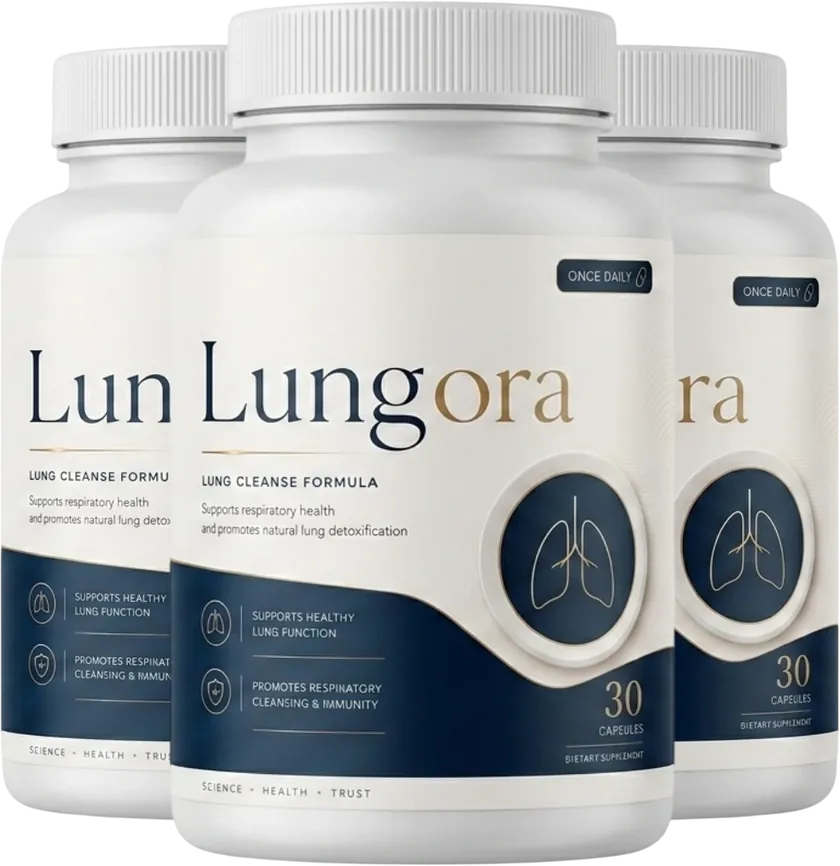
Lungora Results: What to Expect Week by Week
Give Lungora at least 8 to 12 weeks before you judge it.
The first weeks build the daily habit. Research on ingredients like magnesium and CoQ10 usually starts to measure changes from weeks 4 to 8.
Plan around the 60-day refund window too.
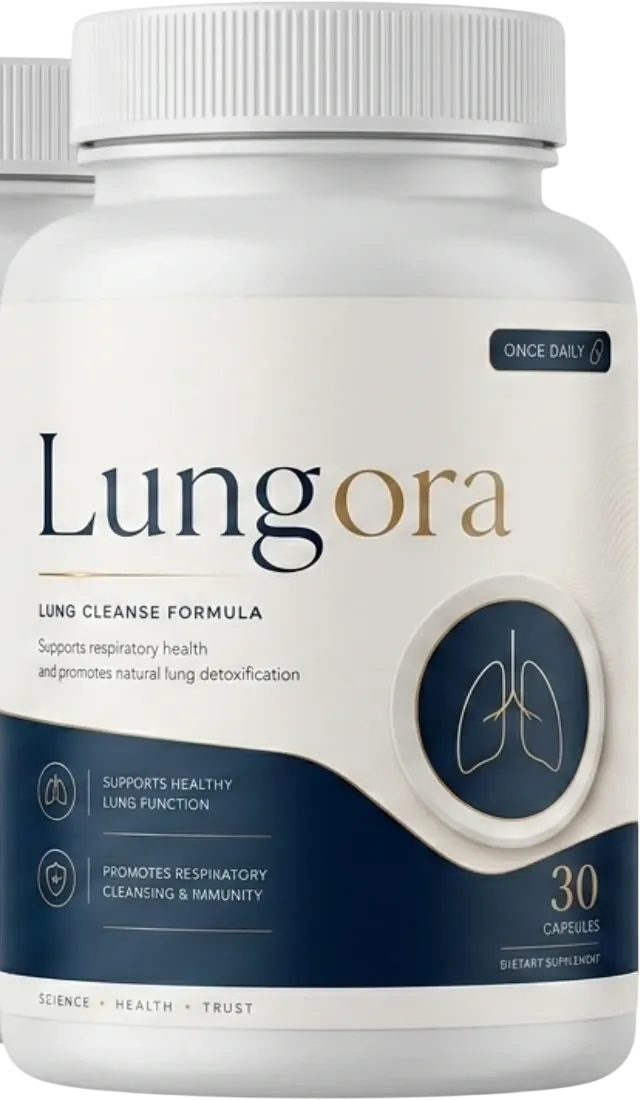
What this timeline is actually mapping
A timeline page for a supplement usually promises a curve that climbs. This one does not, because nothing in the sourced research behind Lungora's six ingredients supports drawing that curve for a lung outcome. What follows is instead a straight account of when the underlying research on magnesium, CoQ10, turmeric, alpha lipoic acid, L-carnitine and butcher's broom actually starts measuring anything, mapped against a calendar you can hold a bottle up to.
None of those six trials was run on this product, at this dose, for a lung outcome. They were run on the ingredients themselves, mostly for metabolic, joint, cardiac, nerve and venous endpoints, at doses that in several cases exceed what the entire 575 mg blend could hold. Treat the weeks below as a map of when evidence generally appears in that literature, not a promise about this bottle.
Week by week, against the calendar
- Week 1: nothing to notice, and nothing wrong with that
Magnesium and antioxidants do not announce themselves in days. Anyone who feels different in the first week is very likely feeling something else entirely: a placebo response, a change in sleep, or ordinary day-to-day variation. The one thing that can genuinely happen this week is a stomach adjusting to a new capsule, which shows up as loose stools or mild nausea, not as easier breathing.
- Weeks 2 to 4: the habit is the only measurable part
By the end of the first bottle, the honest progress to report is behavioral: did you take one capsule a day, at a time you can keep repeating? That is the only variable fully under your control at this stage. Blood levels of magnesium and CoQ10 can shift over these weeks in supplementation studies, but a shifted blood level is not the same thing as a felt effect, and this window is too early to expect either from a 30-day bottle.
- Weeks 4 to 8: where the underlying trials start to look
CoQ10 heart-failure research and magnesium studies typically run at least eight weeks before drawing conclusions, and a large CoQ10 meta-analysis pooling trials over weeks to years found measurable benefit only in diagnosed heart failure, not general wellness use, per Xu et al., 2024. Alpha lipoic acid's dose-response data for blood sugar spans a similar multi-week window, per Jibril et al., 2022. None of that research measured a lung or breathing endpoint at any week, which matters as much as the timing does.
- Weeks 8 to 12: the earliest fair point to judge anything
This is roughly where the faster end of the relevant research finishes its first checkpoint. A fair self-assessment here compares how you feel against everything else that moved over the same 12 weeks: sleep, activity, air quality, stress, and any other supplement or medicine change. Those variables move more in three months than 575 mg of an undisclosed blend is likely to.
The 8-to-24-week research timescale, ingredient by ingredient
| Ingredient | Typical trial length | What was actually measured |
|---|---|---|
| Magnesium | Weeks to months | Blood pressure, sleep and muscle symptoms in deficiency; not a lung outcome, per National Institutes of Health, 2026 |
| CoQ10 | 8 weeks to years | Heart failure markers and exercise tolerance, per Xu et al., 2024 |
| Alpha lipoic acid | 8 to 24 weeks | HbA1c and fasting glucose in type 2 diabetes, per Jibril et al., 2022 |
| Turmeric extract | 4 to 12 weeks | Knee osteoarthritis pain and stiffness scores, per Wu et al., 2019 |
| L-carnitine | 12 to 24 weeks | Body composition and exercise metabolism, per Sawicka et al., 2020 |
| Butcher's broom | 12 weeks | Leg volume and venous symptoms, per Vanscheidt et al., 2002 |
Line them up and a pattern appears: the shortest studies run about a month, the longest run into months, and every single one of them is aimed at something other than a lung or breathing outcome. That range, 8 to 24 weeks, is the honest research timescale behind this product's ingredients, and it is the number the refund clock has to be measured against.
Where the refund window and the research clock collide
Day 60 arrives while the fastest ingredient studies (turmeric, at 4 to 12 weeks) are only sometimes done, and while slower ones (alpha lipoic acid and L-carnitine, at 12 to 24 weeks) are nowhere near finished. A refund decision, in other words, has to be made before the research this product leans on has fully had its say.
Two bottles
60 days of capsules against a 60-day window. The window closes with roughly 0 days of the kit still unopened.
Three bottles
90 days of capsules against the same 60-day window. About 30 days of use happen after the window has already shut.
Six bottles
180 days of capsules against the same 60-day window. Roughly 120 days, well over half the kit, sit outside any refund at all.
This is not an accusation that the window is set in bad faith; 60 days is a common length across this category. It is a scheduling fact worth knowing before choosing a kit size: the larger the kit, the more of it you use with no way back. Full mechanics of the guarantee are on the guarantee page and the refund policy.
What would, and would not, count as real evidence
What would count as evidence it did something
- A change you can point to that started after week 4 or 5, not week 1, since nothing here works that fast.
- A change that holds up when you also account for anything else different about your sleep, activity or air over the same months.
- A lab number your own clinician is tracking, such as blood magnesium, if that is why you started.
What would not count as evidence
- Feeling different within the first few days; that is too fast for anything in this blend.
- Easier breathing, a clearer chest, or a better spirometry reading, since no ingredient here was studied for that outcome at all.
- A change you noticed right after also quitting smoking, changing your air filter, or starting to exercise more, since those move the needle on their own.
Judging it without pretending to know more than the research does
The honest version of this page ends without a promise. A 12-week check against the research timescale behind the ingredients is a fair way to judge whether the habit was worth keeping for you personally. It is not a way to prove or disprove a lung benefit, because none of the six ingredients was tested for one in the first place.
If you decide within the refund window that it is not for you, the return process is straightforward and covered in full on the guarantee page. If a real breathing change shows up at any point on this timeline, week one or week twelve, that belongs in front of a clinician, not tracked against a capsule schedule. More on who should check in first is on the who it’s for page, and the full ingredient-by-ingredient safety picture is on the side effects page. Questions about an order in progress go to the order desk listed at the foot of the page.
Results Timeline: common questions
How fast should I expect to feel anything?
Not in the first week, honestly. The ingredients here work on timescales of weeks to months in the research behind them, and none of that research measured a felt breathing change at any point.
Is there a point where I should give up on it?
If nothing has changed by 12 weeks against a fair comparison, that is a reasonable point to stop, since it sits past where most of the underlying research finds its effects, if any.
Why does the refund window close before the research finishes?
Sixty days is a standard purchase-policy length across this category, set independently of how long magnesium, CoQ10 or turmeric trials actually run, which is commonly 8 to 24 weeks.
Should I buy the six-bottle kit if I want more time to judge it?
A bigger kit gives you more capsules, not a longer refund window. The 60-day clock still starts on the purchase date regardless of kit size.
What if I feel worse instead of better?
Stop and think about timing and dose first, then talk to a clinician, especially if you take a blood thinner or diabetes medicine, since two of the six ingredients interact with those.
Can blood tests show whether it's working?
A magnesium blood level could reflect intake if that is what you started it for. No blood test tracks a lung outcome from this product, because none of its ingredients targets one.
Does taking it longer than 12 weeks change the picture?
Longer use lines up with the slower end of the ingredient research, such as L-carnitine and alpha lipoic acid trials running to 24 weeks, but it still will not surface a lung benefit that was never studied.
Is week 1 stomach upset a sign it's working?
No. It is a digestive adjustment to a new capsule, unrelated to any of the claimed benefits, and it usually settles or does not within the first week or two either way.
Keep reading
The 60-day guarantee, in full
How the refund window works, what it covers, and what it does not.
Read →Interactions and side effects, ingredient by ingredient
The sourced safety picture behind every ingredient named on this timeline.
Read →How to take Lungora
Dose, timing, missed days and storage, laid out step by step.
Read →Order Lungora from the authorized retailer
30 capsules per bottle, one capsule a day. Kits of 2, 3 or 6 bottles run from $49 a bottle on the sales page, with a 60-day money-back guarantee. Questions first? The FAQ page answers most of them.