What Lungora's seals actually verify, and what they do not
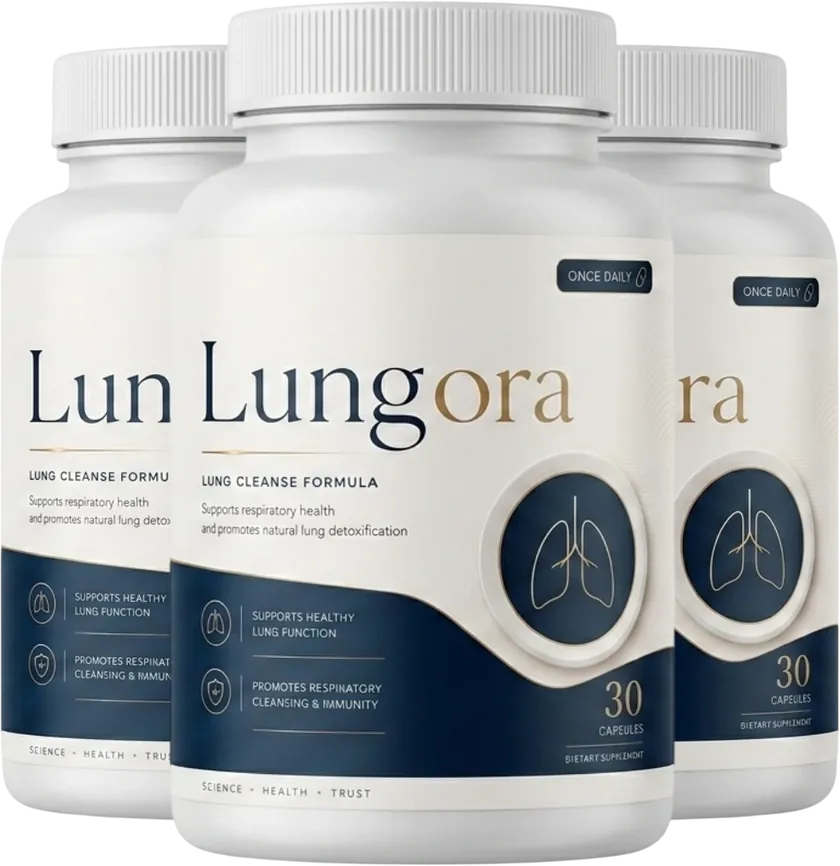
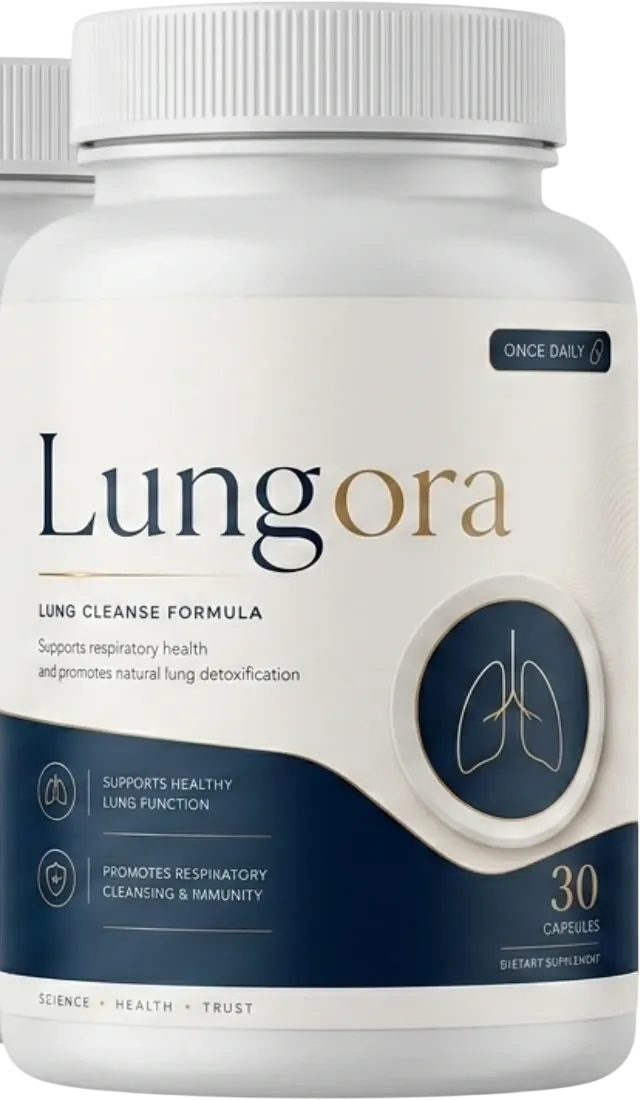
Lungora's seller artwork carries eight seals. Each one is explained below in plain terms, including what it does not verify: FDA registration is a factory listing, not an approval, no GMP certificate number or auditor is published, no physician is named, and "Made in the USA" sits on a label that prints no country of manufacture at all. Real third-party testing would name a lab and a date.
Every mark on the Lungora artwork
Registered Facility
The plant is on the FDA facility register. Registration is a listing, not an approval, and Lungora is not FDA-approved.
GMP Certified
Good Manufacturing Practice rules are claimed for the plant. No certificate number or auditing body is printed beside the mark.

Non-GMO
A non-GMO mark used in the seller artwork. No certifying organisation is named next to it.

Vegetarian Friendly
The shell is hypromellose, a plant cellulose, which matches a vegetarian claim. No certifier is named.
Gluten Free
A gluten-free mark from the artwork. The label prints no allergen statement and no parts-per-million threshold.
Dairy Free
A dairy-free mark from the artwork, again with no allergen line on the bottle itself.

Physician Formulated
A marketing mark. No physician is named anywhere in the material we were given, so treat it as unverified.
Made in the USA
A mark from the artwork. The label itself prints no country of manufacture, only a Colorado distributor address.
Eight marks, read one at a time above. None of them is a lie by itself. Each one describes something narrower than the impression it gives sitting on a bottle next to seven others.
What FDA registration actually means
A "Registered Facility" mark means the plant that makes this product is on the FDA's list of registered food and supplement facilities. Registration is a paperwork requirement for operating at all; it does not mean the FDA inspected this specific batch, tested this formula, or approved any claim on the bottle. Lungora is not FDA-approved, and the label says as much in its own small print: these statements have not been evaluated by the FDA.
This confusion is common enough that it is worth stating twice, in two different ways. A restaurant kitchen is inspected too, and that does not mean the health department endorses every dish on the menu. A dietary supplement facility being registered means the FDA knows the plant exists and can inspect it; it says nothing about whether this particular blend does what its front label implies.
"GMP Certified," with no certificate to check
What "GMP Certified" claims
Good Manufacturing Practice rules cover how a facility handles cleanliness, record-keeping and quality checks during production. Claiming GMP status is common and, when true, a genuinely good sign.
What is missing from this claim
No certificate number, no auditing body and no facility name accompany the mark anywhere in the material we were given. A GMP claim with nothing behind it to check is not the same as one you can verify against a certifier's own record.
A real GMP certificate, if one exists here, would let you look up the auditing organization and confirm the certificate is current. Ask the order desk whether one is available if this matters to you; the artwork alone does not supply it.
"Physician Formulated" names no physician
"Physician Formulated" is one line of text on the artwork, with no name attached to it anywhere in the material we were given. No physician is credited, quoted or otherwise identified for Lungora on this site or in the seller pack we work from. We are not going to invent one, so we treat the phrase as unverified marketing language rather than repeat it as though a named doctor stands behind the formula.
A genuine claim of this kind would usually name the physician, their credential and often their specialty, in a way a reader could look up independently. None of that accompanies this mark.
"Made in the USA," on a label with no country printed
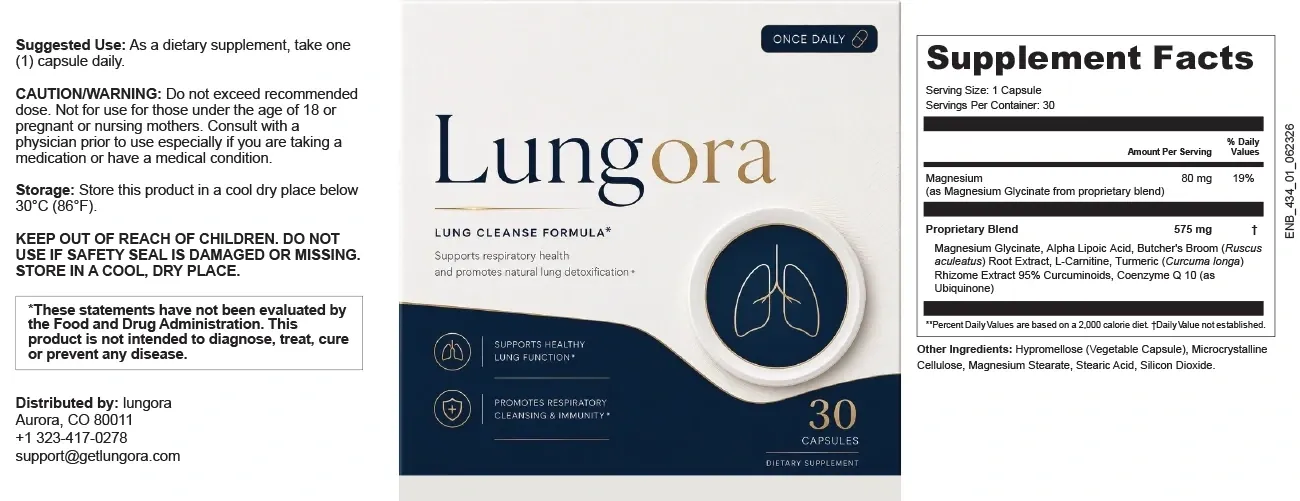
The seller artwork carries a "Made in the USA" mark. The label on the actual bottle prints no country of manufacture at all. What it prints instead is a distributor block: "Distributed by lungora, Aurora, CO 80011 (label)." A distributor address is not a statement of where the capsules were made, and this gap between the artwork's claim and the label's silence is worth naming plainly rather than letting the seal answer a question the bottle itself does not.
It is possible the product is, in fact, made in the United States. It is also possible the mark is standard artwork reused across a seller's catalog. Neither the bottle nor the material we were given lets us tell you which, and a mark on a piece of promotional artwork is not a substitute for a country-of-origin statement printed on the product itself.
The other marks, briefly
| Mark | What backs it here |
|---|---|
| Non-GMO | A mark used in the artwork. No certifying organization is named next to it. |
| Vegetarian Friendly | Consistent with the hypromellose capsule shell. No third-party certifier is named. |
| Gluten Free | A mark from the artwork. The label itself prints no allergen statement or threshold. |
| Dairy Free | A mark from the artwork, again with no allergen line on the bottle. |
| All Natural | A marketing term with no legal definition the FDA enforces, so it describes intent more than a tested standard. |
| 60-Day Money Back | A real, working purchase policy. Covered in full on the guarantee page, and the one mark on this list that is not about manufacturing quality. |
A seal describes an intention or a claimed practice. It does not, by itself, describe a test result. Treat every mark on this list the way you would treat a sentence on a label: worth reading, not worth mistaking for a lab report.
What real third-party testing would actually look like
Real third-party testing, if it existed for this product, would look like a specific, checkable document, not a badge. It would name an accredited laboratory, independent of the manufacturer, along with the exact lot it tested and the date the sample was drawn.
It would report measured values, not just pass or fail: how much elemental magnesium the capsule actually contains against the 80 mg claimed, and ideally a measured amount for each of the other five ingredients inside the 575 mg blend. It would also screen for contaminants, heavy metals and microbial counts among them, since that is the part of testing that protects a buyer regardless of whether the formula itself works.
None of that exists in the material we were given for lot LUN-26/GO-7591. What we have is a batch reference and a certificate reference, covered in full on the batch verification page.
Why a proprietary blend makes any one ingredient harder to verify
A proprietary blend makes independent verification of any single ingredient much harder, even if a lab did test the finished capsule. A lab can dissolve a capsule and measure how much magnesium, alpha lipoic acid, curcuminoid or CoQ10 is present in total. What it cannot do, working from the finished product alone, is confirm that each amount matches a specific target, because the label never states one for five of the six ingredients.
Compare that to the one ingredient that is measured: magnesium at 80 mg. A lab result showing anything other than roughly 80 mg would be a clear mismatch against a stated number. A lab result for, say, alpha lipoic acid has nothing to compare against, because no target was ever printed. The blend format does not make testing impossible, but it removes the yardstick that would tell you whether a test result is good, bad or exactly as intended.
The same blend that hides five individual amounts is also the blend that has to hold enough magnesium glycinate to deliver the printed 80 mg of elemental magnesium. Work through that arithmetic on the elemental magnesium page; it is the clearest example of why a single undisclosed total is harder to check than seven separate numbers would be.
What this page is and is not saying
None of this is a claim that Lungora is unsafe or mislabeled. It is a description of what the marks on the artwork actually say, next to what they leave out, so a reader can weigh the difference instead of taking eight badges at face value.
Questions about the seals or this page go to the website inbox. Questions about a specific order or bottle go to the order desk.
Testing & Quality: common questions
Does the Registered Facility mark mean the FDA approved Lungora?
No. It means the plant is on the FDA's facility register, which is a listing requirement, not an approval of any product or claim.
Is there a GMP certificate number for Lungora?
None is published in the material we were given. No certificate number, facility name or auditing body accompanies the mark.
Who is the physician behind "Physician Formulated"?
No physician is named anywhere in the material we were given. Treat the phrase as unverified marketing wording.
Is Lungora actually made in the USA?
The seller artwork carries a Made in the USA mark, but the label itself prints no country of manufacture, only a Colorado distributor address.
What would real third-party testing for Lungora look like?
A document naming an accredited independent lab, the exact lot tested, the test date, and measured values for identity, potency and contaminants.
Why does a proprietary blend make testing harder to verify?
Because five of the six blend ingredients have no published target amount, so a lab result for any one of them has nothing printed to compare against.
Are any of the eight seals independently certified?
None of the eight names a certifying organization in the material we were given, aside from the 60-day guarantee, which is a purchase policy, not a manufacturing certification.
Does this mean Lungora is unsafe?
No. It means several marks on the artwork describe less than they appear to, which is different from a safety finding.
Keep reading
What does the lot and CoA reference actually confirm?
Why LUN-26/GO-7591 is a draft reference, not a lab result.
Read →What is inside the 575 mg proprietary blend?
The six ingredients, what each is studied for, and why no amount is published.
Read →Why does this site publish no Lungora reviews?
Why a score, a review count and quotes marked as layout copy never made it onto this page.
Read →Order Lungora from the authorized retailer
30 capsules per bottle, one capsule a day. Kits of 2, 3 or 6 bottles run from $49 a bottle on the sales page, with a 60-day money-back guarantee. Questions first? The FAQ page answers most of them.