Butcher's Broom Is a Vein Herb, Not a Lung Herb
Butcher's broom, Ruscus aculeatus, has real placebo-controlled human evidence for chronic venous insufficiency and leg swelling, at gram-level daily doses. It has no human respiratory trial we could find. It shows up in respiratory-sounding blends anyway because a real evidence base for one use gets borrowed to imply support for another, unrelated one.
What Ruscus aculeatus actually is
Butcher's broom is the common name for Ruscus aculeatus, a stiff, spiny evergreen shrub native to the Mediterranean and parts of Western Europe. The name is a literal one: dried bundles of its bristly, flat stems were once tied together and used by butchers to sweep scraps off wooden counters and blocks, which is about as unglamorous an origin story as a supplement ingredient gets.
The part used medicinally is the root, extracted and standardized to a group of compounds called ruscogenins. Those compounds are the reason the plant has any pharmacology worth discussing at all: they are steroidal saponins that act on blood vessel walls, tightening and toning them rather than doing anything to airway tissue, mucus or the lining of a lung.
That single fact, that its active compounds work on veins, is the thread running through everything below. Every human trial located for this article tested a venous or circulatory outcome. None tested breathing, coughing, airway inflammation or any other lung-related endpoint.
The real evidence: veins, not lungs
The best-known human trial is a randomized, double-blind, placebo-controlled study of 148 women with chronic venous insufficiency, a condition where the valves inside leg veins weaken and blood pools instead of returning efficiently to the heart. A standardized butcher's-broom-extract capsule, taken daily for 12 weeks, measurably reduced leg volume compared with placebo and improved ankle and lower-leg circumference along with symptoms of heavy, tired legs (Vanscheidt et al., 2002).
That result is not a one-off. A systematic review and meta-analysis pooling ten randomized, double-blind, placebo-controlled trials of a Ruscus-based combination product found significant improvement in individual chronic venous disease symptoms, pain, heaviness, fatigue, cramps and a feeling of swelling, alongside objectively measured reductions in ankle circumference and leg edema (Kakkos et al., 2017).
An independent, evidence-graded consumer health reference rates butcher's broom at its strongest available rating specifically for chronic venous insufficiency, backed by clinical trials. The same entry rates it far weaker, traditional-use-only evidence, for varicose veins and hardening of the arteries (PeaceHealth et al., 2015).
So the honest summary is not "butcher's broom has no evidence." It has real, repeated, placebo-controlled evidence, for one specific job: helping leg veins move blood back up against gravity and easing the swelling and heaviness that follow when they do it poorly. That is a genuinely useful, well-studied herb. It is a venous herb, and every trial behind it says so.
The doses those trials actually used
| Source | Dose actually studied | What it was studied for |
|---|---|---|
| 148-woman placebo-controlled trial | A standardized extract capsule at the German Commission E-monograph recommended daily dose, for 12 weeks | Leg volume, circumference and venous symptoms |
| 10-trial meta-analysis | A Ruscus extract combined with hesperidin methyl chalcone and vitamin C, per each trial's label dose | Pain, heaviness, fatigue, cramps and measured leg edema |
| Evidence-graded reference | Standardized extract providing 15 to 30 mg ruscogenins three times a day, or roughly 1,000 mg of encapsulated extract three times a day | Chronic venous insufficiency (rated strongest); varicose veins (rated weakest, traditional use only) |
Lay those numbers side by side and a pattern shows up fast: the doses that produced a measured effect run from roughly one to three grams a day of encapsulated extract, taken multiple times daily, sustained for weeks (PeaceHealth et al., 2015). That is the scale a venous trial actually used.
A capsule that puts butcher's broom inside a shared blend with five other ingredients, at a total blend weight nowhere near even the low end of that range, is not delivering anything close to a studied venous dose, on top of using it for a purpose that dose was never tested against in the first place.
How a vein herb ends up in a lung formula
Getting from "well-studied vein herb" to "ingredient in a lung formula" does not require any single bad actor. It is a predictable result of how proprietary blends get assembled.
A herb earns a reputation for being active
Ruscogenins genuinely do something measurable in the body: they tighten blood vessel walls. That earns butcher's broom a spot in general supplement-ingredient databases as a legitimate, bioactive botanical.The specific outcome gets dropped from the shorthand
Somewhere between a research database and a marketing brief, 'improves venous tone and reduces leg edema' gets compressed to 'supports circulation,' a phrase vague enough to attach to almost any product.A formulator reaches for a familiar name inside a blend
Once an ingredient has a track record and a supplier who sells it in bulk, it becomes a low-risk, easy-to-source addition to a proprietary blend, regardless of whether the blend's stated purpose matches the ingredient's actual evidence.No individual amount gets published
Folded into a blend with no milligram figure of its own, butcher's broom's presence becomes a line on an ingredient list rather than a dose anyone could compare to the trials above.
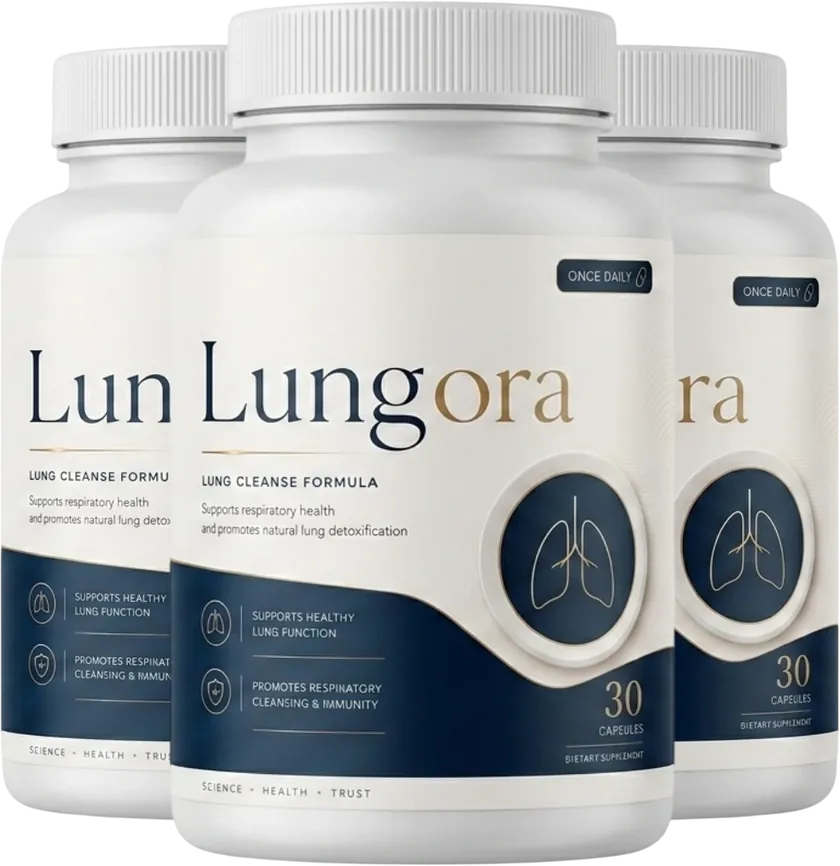
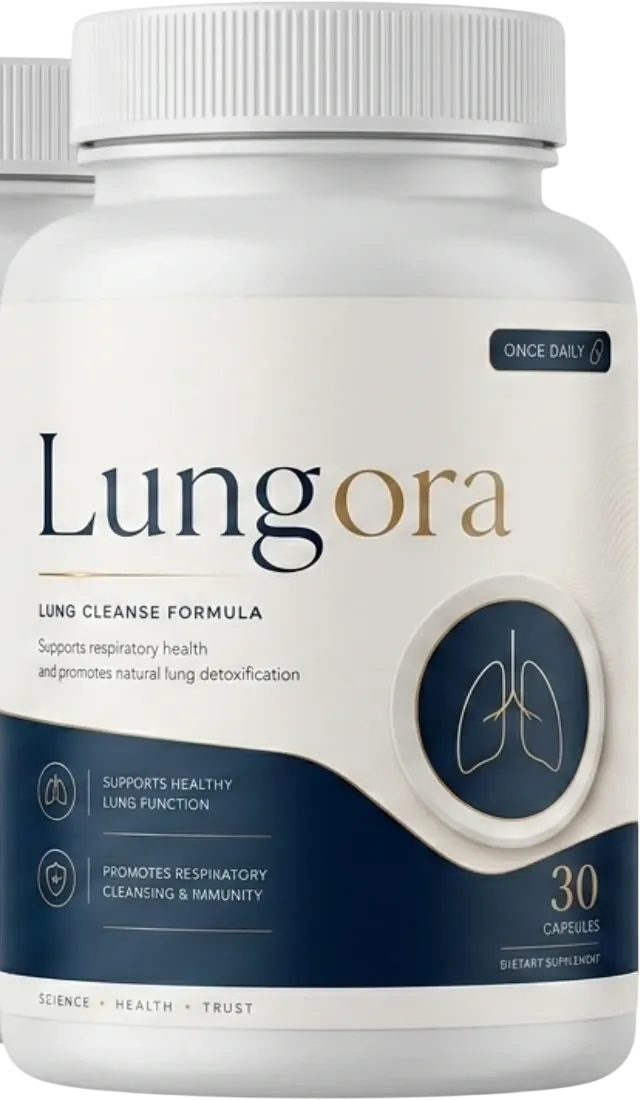
None of those four steps requires deception, exactly. It requires nobody along the chain stopping to ask whether a vein herb belongs in a bottle named for lungs. Lungora's own blend is one example of where that chain ends up; the full six-ingredient breakdown, including which of the six has any human respiratory evidence at all, is on the ingredients page.
How to check any herb's evidence base yourself
You do not need a research background to run this same check on any herb, in any product. It takes four questions and, usually, one search.
- Search the plant's Latin name, not just the common name, alongside the word 'trial' or 'randomized.' Common names vary and blur; Latin names do not.
- Look for what condition the trial actually measured, not what the product claims. A trial measuring leg volume is not evidence for breathing, even if the write-up calls the herb a 'wellness' ingredient.
- Check the dose used in the trial against what, if anything, the product discloses. A blend total with no individual figure means there is nothing to compare.
- Check whether the finding replicates. One small trial is a lead. A meta-analysis pooling several trials, like the ten-trial review above, is a real evidence base.
Running that same four-question check on butcher's broom is exactly how this article was built: the Latin name search turns up venous trials and nothing else, the doses are disclosed and consistent across them, and the meta-analysis confirms the single-trial finding rather than contradicting it. That is what a genuinely supported ingredient claim looks like, for the specific thing it is actually supported for.
"Natural" and "studied" are not the same claim
"Natural" describes where a compound came from. "Studied" describes whether anyone tested it, on whom, at what dose, for what outcome, against a placebo. Those are two entirely different claims, and a label can make the first one true while quietly borrowing the credibility of the second.
Butcher's broom is about as legitimately "natural and studied" as a supplement herb gets: a real plant, a real active compound, real placebo-controlled human trials, a real meta-analysis. None of that changes the fact that we found no human respiratory trial for it. Studied for one thing and present in a product sold for another are not the same as studied for that product's claim.
That distinction matters more than a single ingredient. It is the same gap behind the front-label wording examined in why lung detox is not a real thing, and it is the reason the one honest answer to "what actually helps a lung" points somewhere else entirely, laid out in what actually helps your lungs. A well-studied herb, used for the thing it was studied for, is a genuinely useful ingredient. The same herb, used to imply support for an organ it was never tested on, is a natural ingredient wearing a claim it did not earn.
Questions readers ask
What is butcher's broom?
The common name for Ruscus aculeatus, a spiny Mediterranean evergreen shrub. The root is extracted and standardized to compounds called ruscogenins, which tighten and tone blood vessel walls.
Is there real research behind butcher's broom?
Yes, for veins specifically. A 148-woman placebo-controlled trial and a ten-trial meta-analysis both found it reduced leg swelling and improved symptoms of chronic venous insufficiency, a condition where leg veins struggle to move blood back to the heart.
Does butcher's broom help with breathing or lung health?
No human trial for a respiratory or lung outcome was found for this article. Every study located tested a venous or circulatory endpoint, not breathing, coughing or airway inflammation.
What dose was used in the venous trials?
Roughly the German Commission E-monograph recommended daily dose in the main placebo-controlled trial, and separately, standardized extract providing 15 to 30 mg ruscogenins three times a day, or about 1,000 mg of extract three times a day, in an evidence-graded review.
Why would butcher's broom end up in a lung-focused supplement?
Because it has a real reputation as a bioactive, well-studied botanical, which makes it an easy, low-risk ingredient to add to a proprietary blend, regardless of whether the blend's stated purpose matches what the herb was actually tested for.
How can I check whether an herb in my supplement is actually studied for what the label claims?
Search the plant's Latin name alongside 'randomized trial,' check what outcome the trial measured rather than what the product claims, compare the trial dose to what the label discloses, and look for a meta-analysis confirming the finding rather than relying on one small study.
Is 'natural' the same as 'clinically supported'?
No. Natural describes where an ingredient came from. Studied describes whether it was tested, on whom, at what dose, for what outcome. Butcher's broom is genuinely both natural and studied, just not for lungs.
Should I avoid butcher's broom entirely?
Not necessarily. The venous-insufficiency trials reported good tolerability. The issue is not that the herb is dangerous, it is that no evidence supports using it, or expecting anything from it, as part of a respiratory product.
Keep reading
What actually helps your lungs
Smoking cessation, cutting indoor and outdoor exposures, vaccination and exercise: the evidence-based list a lung supple...
Read →Why lung detox is not a thing
Where lung detox marketing came from, what the American Lung Association says about it, and why inhaled cleanse products...
Read →How much does Lungora cost?
Pack sizes, days of supply and how to pick the right one.
Read →Order Lungora from the authorized retailer
30 capsules per bottle, one capsule a day. Kits of 2, 3 or 6 bottles run from $49 a bottle on the sales page, with a 60-day money-back guarantee. Questions first? The FAQ page answers most of them.