Why 'Lung Detox' Is Not a Real Thing
Lung detox borrows a generic wellness pitch and attaches it to an organ that already cleans itself: mucus and cilia clear the airways continuously, and immune cells handle the rest. The American Lung Association calls detox claims largely unproven and warns inhaled versions can cause harm. Check for a named, dosed respiratory ingredient instead of the word 'detox.'
Where the "detox" idea comes from
"Detox" did not start as a lung word. It started as a shorthand for flushing built-up toxins out of the body in general, a promise that took off with juice cleanses, colon cleanses and liver-support teas in the early 2000s wellness market. The pitch was always the same shape: modern life leaves residue behind, and a product can remove it faster than the body would on its own.
That premise never needed a specific organ. A juice cleanse could claim to clear the gut, the skin or "toxins" in general, with no anatomy attached. Once the format proved it could sell, marketers began attaching it to individual organs one at a time, and the lungs eventually got their turn, alongside the liver and the colon before them.
What makes the lung version worth a closer look is that, unlike a vague claim about "toxins," a lung is an organ with a well-described, well-studied way of clearing itself. That gives the claim something concrete to be checked against, and it does not hold up once you check it.
Why it took hold for lungs specifically
Lungs make an easy target for this kind of claim for reasons that have nothing to do with biology. A cough feels like something is stuck. Smoke, wildfire haze and city smog are all things a person can literally see going into their chest. And a capsule promising to undo some of that is a much easier sell than the two things that actually help: breathing cleaner air and, for smokers, quitting.
There is also a visual shorthand that does a lot of unpaid marketing work: the blackened, tar-stained lung photograph used in anti-smoking campaigns. That image plants the idea that a lung is a container that accumulates visible gunk, and that gunk, once you picture it, feels like something a product ought to be able to scrub out. Real airway damage does not look or clear like that, but the picture is memorable and the biology is not.
Put those two things together, an organ people worry about and a mental image of buildup, and "lung detox" writes itself as a phrase. It promises to solve a fear without asking anyone to change a habit, which is exactly the gap a capsule can slide into.
What the lungs actually do instead
Lungs already run a continuous, built-in cleaning system, and it does not pause while you decide whether to buy something. Ciliated cells make up more than half of the cells lining the airways, each one carrying hundreds of hair-like cilia that beat eight to twenty times a second, sweeping mucus, and whatever it has trapped, up and out toward the throat, where it is swallowed or coughed up without anyone noticing (Kia'i et al., 2023). Physiologists call this the mucociliary escalator, and the name is literal: it runs on its own, in one direction, all day.
| Layer | What it does |
|---|---|
| Mucus | A thin, sticky layer that traps dust, smoke particles, pollen and bacteria before they reach the small airways |
| Cilia | Hundreds of hair-like structures per cell, beating in coordinated waves that push trapped mucus upward toward the throat |
| Cough and swallow | The disposal step. What reaches the throat is swallowed without notice or cleared by a cough |
| Alveolar macrophages | Immune cells that patrol the deepest air sacs, past where mucus and cilia reach, and engulf what slips through |
Past where the mucociliary escalator reaches, in the alveoli themselves, a second system takes over. Alveolar macrophages patrol the air sacs and quietly engulf particles, bacteria and dying cells, clearing debris without setting off the kind of inflammation that would damage the tissue around it (Aegerter et al., 2022). Neither layer waits for an instruction. Both run whether or not anyone swallows a capsule, and the American Lung Association describes the same mechanism in plainer language for exactly that reason (American et al., 2026).
What the American Lung Association says
"Detox remedies may seem like a great concept, but unfortunately many claims made by companies selling unproven treatments are exaggerated." The Association adds that most lung-detox products are not FDA approved and lack adequate scientific data to recommend their use, and describes the lungs as "self-cleaning organs that will begin to heal themselves once they are no longer exposed to pollutants" (American et al., 2024).
That is a direct answer to a direct question, from the organization whose entire purpose is lung health, and it does not leave much room for a softer reading. The claims are exaggerated, the products are generally unapproved, and the actual healing mechanism is the one the lungs already run, once the source of the damage stops.
The same guidance points people toward the things that do have evidence behind them: quitting smoking or vaping, controlling indoor air quality, checking outdoor air quality before going out, and staying active. None of the four is a product you swallow, and none of them is framed as a "cleanse."
Why an inhaled "lung cleanse" can be worse than useless
"Lung cleanse" products are not all capsules. Some are sold as inhalers, diffuser blends or vape-style devices, marketed on the idea that if the lungs need clearing, breathing something in should reach them faster than swallowing something. That reasoning has the causation backward, and it introduces a real risk that a capsule does not carry.
The American Lung Association states directly that inhaled detox products in particular can cause harm (American et al., 2024). Oils, aerosolized plant extracts and vapor carriers were never part of the air the lungs evolved to filter. Sending them in on purpose can irritate the airway lining, and inhaled oil droplets in particular have been linked to a rare but serious lung inflammation because the lungs have no efficient way to clear liquid fat out of the alveoli.
So the honest comparison is not "capsule versus inhaler, pick the stronger one." It is "a capsule with no respiratory ingredient in it, which does nothing, versus an inhaled product that can actively add a new irritant to the exact tissue it claims to be cleaning." Neither one clears a lung. Only one of them can hurt you trying.
A front label, quoted and corrected
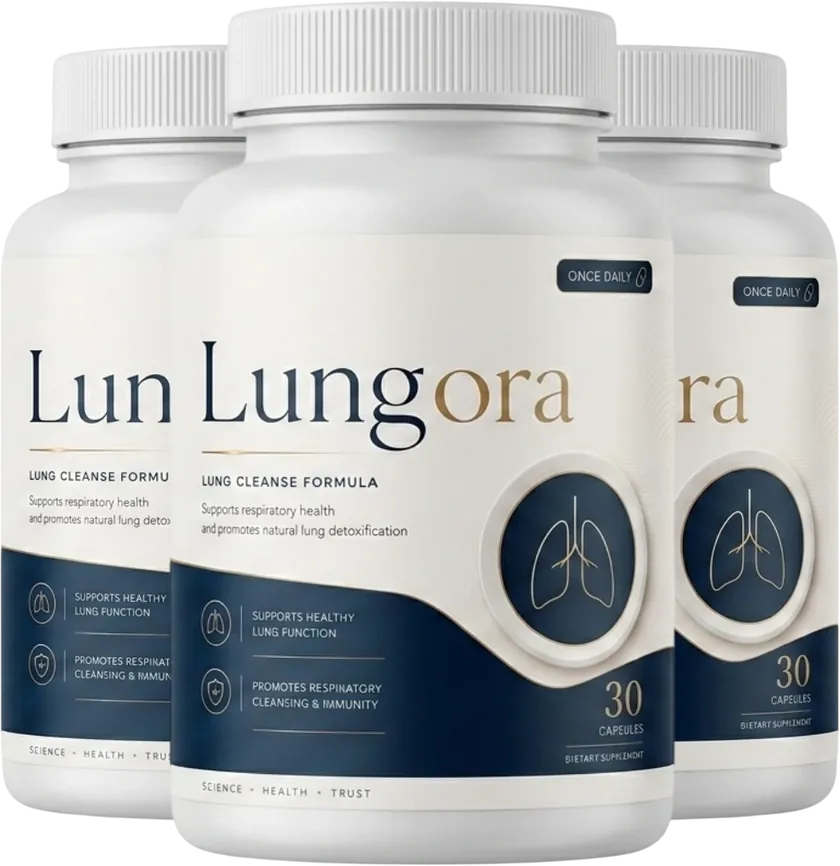
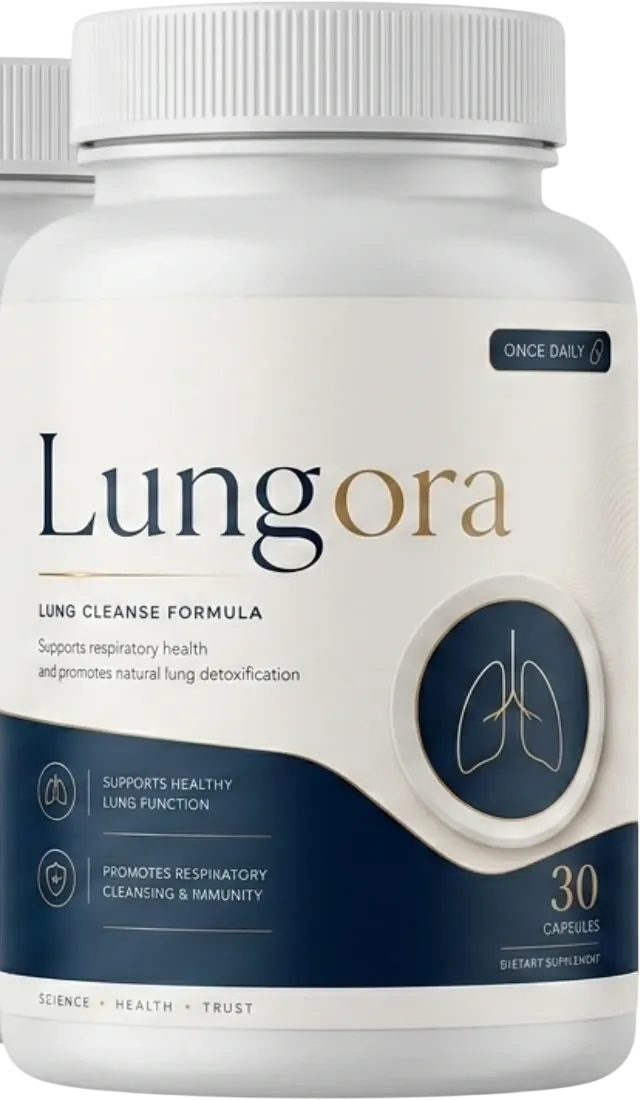
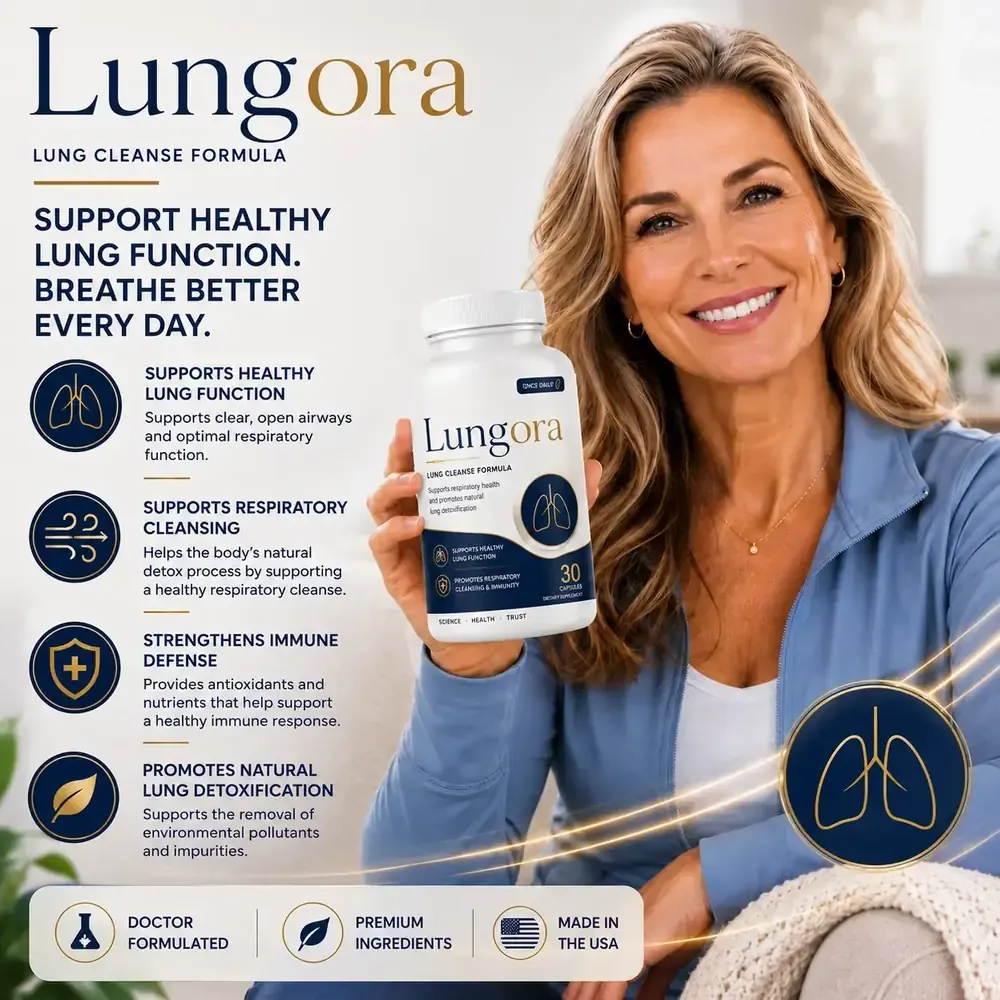
Lungora is sold as a capsule, not an inhaler, so the acute inhalation risk above does not apply to it. But its front label is a clean example of the same "detox" framing, in the milder oral form, and it is worth quoting exactly rather than paraphrasing.
| What the front label says | What is actually true |
|---|---|
| "Lung Cleanse Formula" | A product name, not a demonstrated action. Nothing lower on the label names a respiratory ingredient. |
| "Supports respiratory health and promotes natural lung detoxification" | Lungs already clear themselves continuously, as described above. No capsule performs that process for them. |
| "Supports Healthy Lung Function" | A structure and function statement about a normal process, not evidence of a measured change in lung function. |
| "Promotes Respiratory Cleansing & Immunity" | Two claims folded into one line, with no named mechanism and no respiratory ingredient on the panel behind either half. |
Behind that wording sits a 575 mg proprietary blend of six ingredients, none of which is studied for a lung or breathing outcome. One of the six, butcher’s broom, has real human evidence behind it, just not for this. That gets its own separate look in why a vein herb ended up in a lung formula. The rest of the six-ingredient breakdown is on the ingredients page.
None of this makes Lungora unusually dishonest as capsules in this category go. It makes it a representative example: a real bottle, a real blend, and a front-label word that the organ it names does not need performed on it by anything swallowed.
What to check instead of the word "detox"
None of this means every capsule on a shelf is worthless, or that ingredients like magnesium, turmeric or CoQ10 lack any evidence at all. It means the word "detox" is doing marketing work that the panel behind it cannot back up, and a buyer can check for that pattern on any bottle, not just this one.
- A named respiratory ingredient, not just a blend that happens to sit near the word 'lung' on the box.
- A published milligram amount for that ingredient, not a total blend weight with no individual figures.
- A human trial for a breathing or airway outcome specifically, not a trial for something else entirely, like veins or blood sugar.
- Structure and function wording ('supports') rather than a disease claim ('treats', 'reverses', 'cleanses'), since federal guidance requires real clinical evidence before any disease-related claim can be made.
- No promise to substitute for quitting smoking, an inhaler or a prescribed medicine.
Federal guidance backs the last two points directly: marketers making a disease-related claim need competent, reliable clinical evidence before making it, and should not lean on qualifiers to soften a claim they cannot support (Federal et al., 2022).
And if the reason you are reading this is that your own breathing has changed, the checklist above is not the first step. A cough lasting eight weeks or more, breathlessness that does not ease, coughing up blood, wheezing or unexplained chest pain are reasons to see a doctor, not reasons to compare capsules (American et al., 2026). What genuinely moves the needle on lung health, in the order the evidence supports it, is laid out plainly in what actually helps your lungs, and the full physiology behind the escalator above is on how lungs clean themselves.
Questions readers ask
Is lung detox a real medical process?
No. It is a marketing term borrowed from general wellness detox products. Lungs clear themselves continuously through mucus, cilia and immune cells, and no swallowed or inhaled product adds a step that process is missing.
What does the American Lung Association say about lung-cleanse products?
That the claims are largely exaggerated, that most such products are not FDA approved, and that they lack adequate scientific data to recommend using them. It describes the lungs as self-cleaning organs that begin to heal on their own once exposure to pollutants stops.
Can an inhaled lung-cleanse product actually hurt me?
Yes, according to the American Lung Association, which states inhaled detox products in particular can cause harm. Inhaling oils or aerosolized extracts introduces a new irritant to airway tissue that has no efficient way to clear liquid fat or foreign chemicals out of the alveoli.
How do lungs actually clean themselves?
Mucus traps particles, cilia sweep that mucus upward toward the throat where it is swallowed or coughed out, and alveolar macrophages, immune cells in the deepest air sacs, engulf whatever slips past that first layer. All of it runs continuously, without any product involved.
Does quitting smoking reverse lung damage the way a detox claims to?
Quitting is the one step with real, measured evidence behind it, but recovery is gradual, not instant. A 2025 meta-analysis found only a marginal, not statistically significant, improvement in lung function over 12 to 52 weeks after quitting, which is a slower and more honest picture than any cleanse promises.
Why does Lungora's front label say 'promotes natural lung detoxification'?
Because that phrase sells, not because any ingredient on the panel is studied for a lung or breathing outcome. The blend behind it contains six ingredients, most studied for veins, nerves, joints or metabolism, and none of them respiratory.
What should I look for instead of a 'lung cleanse' claim?
A named respiratory ingredient with a published milligram amount and a human trial for a breathing outcome specifically, plus structure and function wording rather than a disease claim, since federal guidance requires real clinical evidence before a marketer can make a disease-related claim.
When should I see a doctor instead of buying a supplement?
If you have a cough lasting eight weeks or more, breathlessness that does not ease, coughing up blood, wheezing, or unexplained chest pain. The American Lung Association frames prompt evaluation of those signs as the priority, not a capsule.
Keep reading
Butcher's broom is a vein herb
What Ruscus aculeatus is, its real evidence in leg swelling and vein health, the doses those trials used, and how to che...
Read →What actually helps your lungs
Smoking cessation, cutting indoor and outdoor exposures, vaccination and exercise: the evidence-based list a lung supple...
Read →How much does Lungora cost?
Pack sizes, days of supply and how to pick the right one.
Read →Order Lungora from the authorized retailer
30 capsules per bottle, one capsule a day. Kits of 2, 3 or 6 bottles run from $49 a bottle on the sales page, with a 60-day money-back guarantee. Questions first? The FAQ page answers most of them.