What Actually Helps Your Lungs
Quitting smoking, avoiding indoor and outdoor pollution, staying current on recommended vaccines, getting about 2.5 hours a week of activity, and seeing a doctor early for warning signs are the evidence-based steps for lung health. Each demands a behavior change or a medical decision, not a purchase, and no supplement replaces any of them.
Quitting smoking, and what actually changes
Of everything on this list, quitting smoking is the one with a real, measured number attached to it, so it is worth starting with what that number actually shows, rather than what people assume it shows.
A 2025 meta-analysis pooled 11 studies and more than 1,300 participants who quit smoking, tracking lung function over 12 to 52 weeks. It found only a marginal, not statistically significant, improvement in FEV1, the standard measure of how much air a person can forcefully exhale in one second, with no meaningful change in total lung capacity or the ratio between the two (Wang et al., 2025).
A marginal, non-significant change over roughly three to twelve months is a far less exciting claim than "detoxifies your lungs." It is also the honest one. Younger people and those with asthma, rather than older people with COPD, showed somewhat larger improvements in the same data, which fits with airway healing being a gradual, biological process rather than a single event.
None of that is an argument against quitting. It is the opposite: quitting is still the single step on this entire list with a controlled human trial behind it measuring an actual respiratory outcome. Nothing sold in a bottle can say the same. It just means the honest timescale is months, and the honest size of the effect is real but modest, not the overnight reversal a marketing page might imply.
Cutting the air you breathe, indoors and out
The National Heart, Lung, and Blood Institute lists avoiding air pollution as one of five evidence-based steps for lung health, right alongside not smoking, and it splits that advice into two directions: what is in the air outside, and what is in the air inside a home (National Heart, 2024).
| Where | What actually helps |
|---|---|
| Outdoors | Check the air-quality index before spending extended time outside, and limit strenuous outdoor activity on days it is poor |
| Outdoors | Wear protective equipment, such as a well-fitted mask, in smoke, dust or heavy traffic pollution when it cannot be avoided |
| Indoors | Ventilate cooking areas and avoid indoor smoking or vaping, since indoor air can carry higher pollutant concentrations than outdoor air |
| Indoors | Address mold, and avoid strong aerosol chemical cleaners in a closed room, both irritants to airway tissue |
This is deliberately unglamorous advice: check an index, open a window, choose a mask on a bad day. None of it promises a transformation, and all of it is a step a person actually controls, which is more than can be said for a swallowed capsule with no respiratory ingredient in it.
Vaccines: the one item on this list that is preventive, not corrective
The same National Heart, Lung, and Blood Institute guidance names regular checkups and recommended vaccines, specifically flu, pneumonia and COVID-19, as one of its five steps for keeping lungs healthy (National Heart, 2024).
This one is worth separating out from the rest of the list because it works differently. Quitting smoking and avoiding pollution reduce ongoing exposure to things that damage airway tissue over time. Vaccination does something else: it lowers the odds that a respiratory infection turns severe enough to cause lasting harm in the first place. One is about slowing accumulated damage. The other is about preventing a specific acute event before it happens.
That distinction matters because it is the opposite of what a "cleanse" framing implies. A cleanse promises to undo something that has already happened. A vaccine does not undo anything; it changes the odds of a future infection doing serious damage to the lungs at all. Prevention, not correction, is where the actual leverage sits.
Exercise and breathing capacity
The same five-step guidance sets a specific, checkable bar for activity: at least two and a half hours a week of moderate to vigorous physical activity (National Heart, 2024). That is a concrete number, not a vague instruction to "move more," and it is worth treating it as the floor rather than a suggestion.
Exercise does not add new capacity to the lungs the way lifting weights adds muscle. What it does is train the muscles around the lungs, the diaphragm and the muscles between the ribs, to work more efficiently, and it trains the cardiovascular system to move the oxygen those lungs pull in more effectively through the rest of the body. The lungs themselves are not the part being upgraded; the system around them is.
That is also why the effect shows up gradually and through consistency rather than a single session. Someone who is out of breath climbing stairs after a sedentary stretch is not necessarily dealing with damaged lungs; they may be dealing with deconditioned supporting muscles that regular activity, sustained over weeks, retrains. It is a real, evidence-based lever, and it works on the same slow timescale as everything else on this list, not on the timescale a marketing page implies.
Getting symptoms checked early
Everything above is about prevention and gradual improvement. This part is about the situation where neither of those is the right response, and a bottle is actively the wrong one.
The American Lung Association lists specific symptoms that call for a medical evaluation rather than self-treatment: a cough lasting eight weeks or longer, shortness of breath that does not resolve after exercise or that shows up with little or no exertion, mucus production lasting a month or longer, wheezing, coughing up blood, and unexplained chest pain lasting a month or more, especially if it worsens with breathing or coughing (American et al., 2026).
Every symptom on that list is more treatable the earlier it is caught, and every week spent trying a capsule instead of getting evaluated is a week that condition, whatever it turns out to be, had to progress unchecked. The Association frames early evaluation as potentially life-saving specifically because several of the underlying causes respond much better to treatment started early than treatment started late.
None of this is about panicking over an ordinary cold. It is about recognizing the specific pattern, duration past eight weeks, blood, unexplained chest pain, that separates something that should be monitored from something that needs a doctor this week.
What a supplement is actually competing with
Put the four real items on this list next to each other and a pattern shows up: quitting smoking, cutting exposure, vaccination and exercise, plus early evaluation when something changes. Every one of them is either a behavior or a medical decision. None of them is a supplement, and none of them requires buying anything.
| What actually helps | What it requires | Where a lung-cleanse capsule fits |
|---|---|---|
| Quitting smoking | Behavior change, sustained over months | Not a substitute. No supplement offsets ongoing smoke exposure. |
| Avoiding pollution, indoors and out | Checking an air-quality index, ventilation, protective equipment | Not a substitute. Nothing swallowed changes what you breathe in. |
| Vaccination | A scheduled shot, discussed with a clinician | Not a substitute. A capsule does not lower infection risk. |
| Exercise | About 2.5 hours a week of activity, sustained | Not a substitute. No capsule trains the diaphragm or the cardiovascular system. |
| Early evaluation of symptoms | A doctor's visit when warning signs appear | Not a substitute, and the riskiest place for a delay. |
This is the honest reason a "lung cleanse" pitch is appealing: every real item on that list asks for effort, a habit change or a scheduled appointment, and a capsule asks for none of that. It is easier to swallow a pill once a day than to quit smoking, check an air-quality index or book a medical appointment. Easier is not the same as effective, and on this particular list, the capsule is not on it at all.
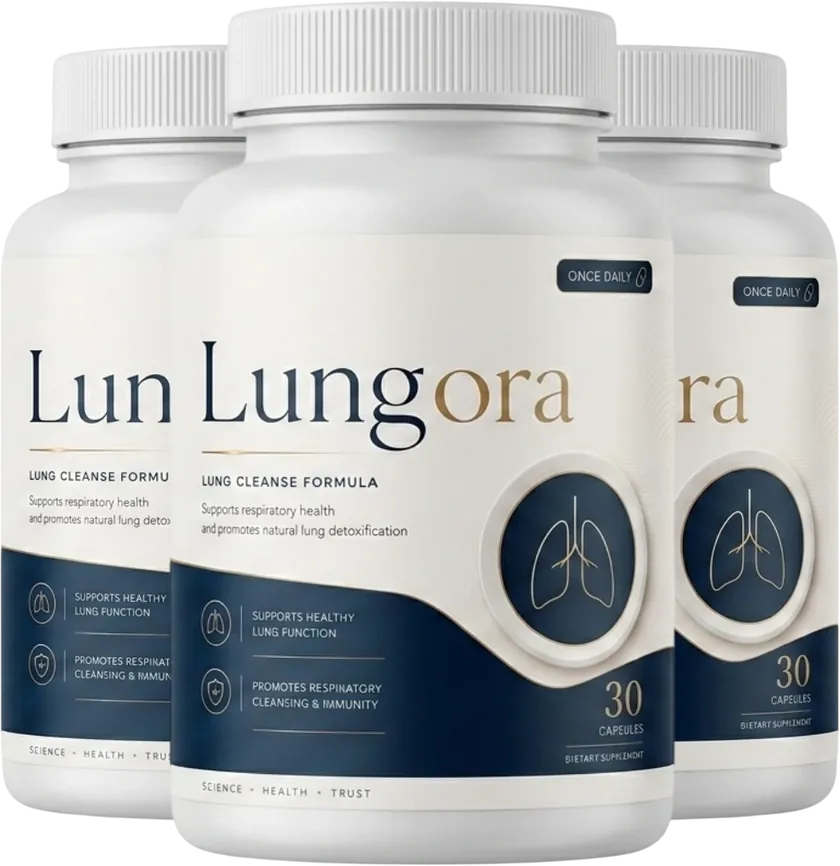
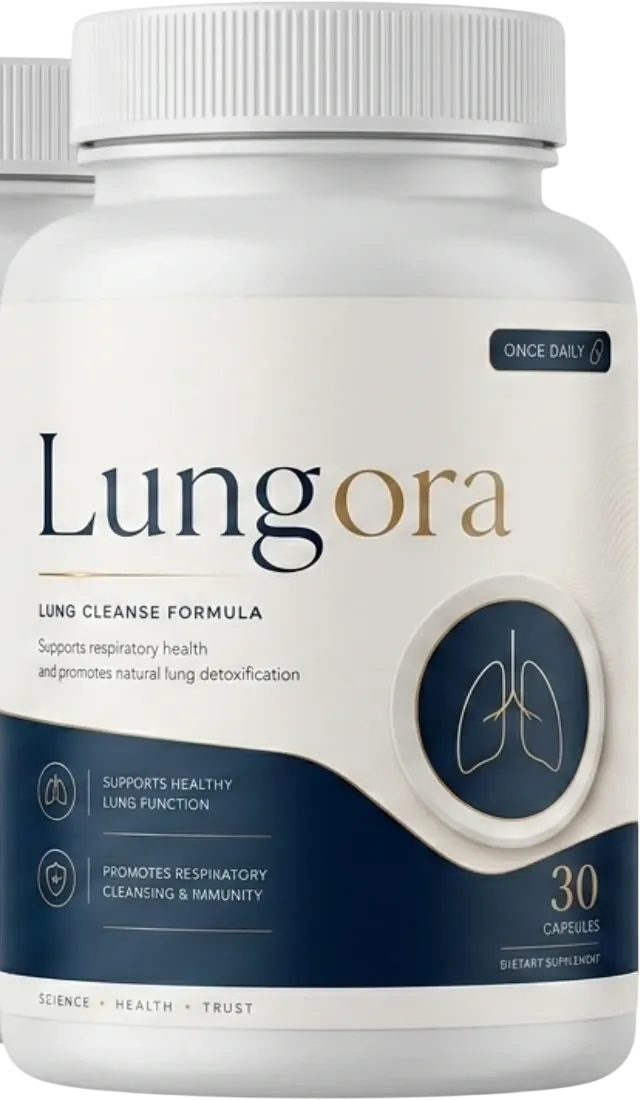
The physiology behind why a swallowed product cannot add a step the lungs are not already running is covered in how lungs clean themselves, and the broader pattern behind the marketing itself is in why lung detox is not a real thing. If a specific ingredient in a specific bottle caught your attention, the six-ingredient breakdown behind Lungora is on the ingredients page.
Questions readers ask
What is the single most evidence-based step for lung health?
Quitting smoking, for anyone who smokes. It is the only item on this list with a controlled human trial measuring an actual respiratory outcome, though the honest timescale is months and the measured effect is real but modest, not an overnight reversal.
How long does it take for lung function to improve after quitting smoking?
A 2025 meta-analysis tracking 12 to 52 weeks after quitting found only a marginal, not statistically significant, improvement in FEV1, with no meaningful change in total lung capacity. Recovery is gradual, not immediate.
What can I actually do about outdoor air pollution?
Check the air-quality index before extended time outdoors, limit strenuous activity on poor-air-quality days, and use protective equipment like a well-fitted mask in smoke, dust or heavy traffic pollution when it cannot be avoided.
Does indoor air matter as much as outdoor air?
Yes. Guidance from the National Heart, Lung, and Blood Institute treats indoor air quality as its own step, separate from outdoor pollution, covering ventilation, avoiding indoor smoking or vaping, and limiting strong aerosol chemicals in closed rooms.
Which vaccines are specifically recommended for lung health?
Flu, pneumonia and COVID-19 vaccines are named in National Heart, Lung, and Blood Institute guidance as one of five evidence-based steps for keeping lungs healthy, alongside not smoking, avoiding pollution, staying active and getting regular checkups.
How much exercise actually helps breathing capacity?
At least two and a half hours a week of moderate to vigorous physical activity, per National Heart, Lung, and Blood Institute guidance. Exercise trains the diaphragm, rib muscles and cardiovascular system rather than adding new capacity to the lungs themselves.
What symptoms mean I should see a doctor instead of trying a supplement?
A cough lasting eight weeks or longer, shortness of breath that doesn't resolve or occurs with little exertion, mucus lasting a month or more, wheezing, coughing up blood, or unexplained chest pain lasting a month or more, especially if it worsens with breathing.
Is a lung-cleanse supplement on this list anywhere?
No. Every genuinely evidence-based step here is a behavior change or a medical decision: quitting, reducing exposure, vaccination, exercise or evaluation. None of them is a product you swallow, and no supplement substitutes for any of them.
Keep reading
Butcher's broom is a vein herb
What Ruscus aculeatus is, its real evidence in leg swelling and vein health, the doses those trials used, and how to che...
Read →Why lung detox is not a thing
Where lung detox marketing came from, what the American Lung Association says about it, and why inhaled cleanse products...
Read →How much does Lungora cost?
Pack sizes, days of supply and how to pick the right one.
Read →Order Lungora from the authorized retailer
30 capsules per bottle, one capsule a day. Kits of 2, 3 or 6 bottles run from $49 a bottle on the sales page, with a 60-day money-back guarantee. Questions first? The FAQ page answers most of them.